
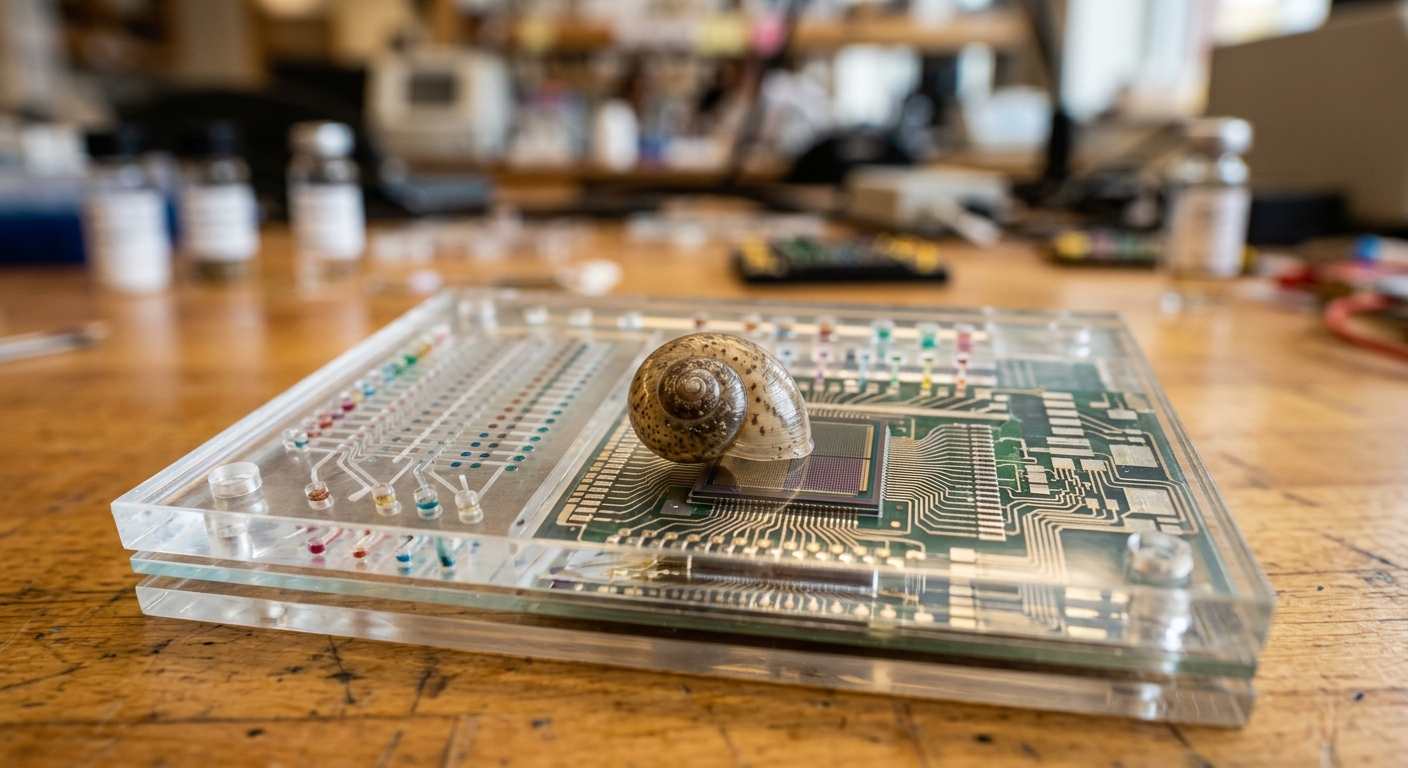
The foundational genome architecture of the New Zealand freshwater snail, Potamopyrgus antipodarum, has undergone a massive scale-up via a recent whole-genome duplication (WGD) event. By transitioning from a standard diploid configuration to triploid and tetraploid arrays, the lineage has drastically multiplied its chromosomal payload to bypass traditional reproductive protocols.
System-Level Polyploidy: Scaling Chromosomal Architecture
In standard biological compute, inheriting three or four sets of chromosomes triggers a fatal exception during cell division. However, flow cytometry diagnostics using propidium-iodide confirm that P. antipodarum has successfully stabilized this massive injection of genetic material. The organism shifted from a traditional two-copy diploid framework into an expanded polyploid architecture. This doubles or triples the available genetic bandwidth, effectively turning a standard meiotic replication cycle into a highly parallelized asexual cloning protocol.
This architectural shift allows female lineages to clone redundant chromosomal data directly into offspring, bypassing the state latency of sexual reproduction. The expanded genome size generates a high volume of heritable structural variation. While whole-genome duplication carries the risk of accumulating catastrophic mutations—analogous to uncontrolled bit rot—this species utilizes the extra genomic capacity to fuel rapid evolutionary plasticity.
Diagnostic Telemetry & Architectural Benchmarks
Comparative sequencing by researchers at the University of Iowa, leveraging high-throughput next-generation sequencing (NGS), provides direct evidence of this architectural fork. Initial genome assemblies achieved >100X coverage across multiple methodologies, revealing that approximately 35% of the genomic scaffolds contain extended, nearly identical duplicated regions. Analyzing heterozygous sites across these datasets demonstrates distinct sequencing depths and allele frequencies that confirm tetraploid structural arrays. Furthermore, genomic analysis confirms that asexual triploid (3x) and tetraploid (4x) lineages successfully forked from diploid sexual ancestors across multiple independent evolutionary events.
To understand the scope of this expansion, we can compare the baseline diploid architecture of the obligately sexual relative, P. estuarinus, to the polyploid P. antipodarum lineages. The massive leap in structural data necessitates entirely different maintenance protocols for mutation buffering.
| Specification / Metric | Standard Architecture (Diploid) | Expanded Architecture (Polyploid) |
|---|---|---|
| Species Implementation | P. estuarinus / Sexual P. antipodarum | Asexual P. antipodarum |
| Ploidy (Data Redundancy) | 2x (Diploid) | 3x (Triploid) or 4x (Tetraploid) |
| Reproductive Protocol | Sexual (Meiotic Recombination) | Asexual (Clonal Replication) |
| Sequence Duplication Rate | Standard Baseline | ~35% Identical Duplicated Regions |
| Mutation Accumulation | Low (Cleared via Recombination) | High (Buffered by Redundant Gene Copies) |
Meiotic Orchestration and Rediploidization Dynamics
Managing an expanded genetic payload introduces severe systemic overhead and alters the foundational meiotic orchestration layer. Without the inherent error-correcting protocols of sexual recombination, asexual polyploids accumulate deleterious structural mutations at an accelerated rate. However, the additional chromosome sets function as a massive hardware-level parity buffer. This multi-copy redundancy masks the immediate phenotypic impact of allele corruptions, effectively preventing system-wide fatal errors during cellular replication.
Empirical benchmark testing via multi-year common garden experiments indicates that polyploid P. antipodarum clones bypass the reproductive state latency of their diploid counterparts, achieving biological maturity and initiating replication cycles significantly faster. Despite these front-end throughput advantages, genomic telemetry points to an ongoing “rediploidization” phase. To manage long-term cellular compute efficiency, the organism is actively silencing redundant duplicate sequences, streamlining its nuclear architecture back toward a more optimized operational state.
- P. antipodarum executed a systemic whole-genome duplication (WGD), scaling from a standard diploid architecture to triploid and tetraploid configurations.
- Genome assemblies exceeding 100X coverage demonstrate that roughly 35% of the chromosomal scaffolds contain deeply identical duplicated regions.
- This polyploid expansion acts as a high-risk evolutionary parity buffer, allowing rapid asexual cloning at the expense of higher long-term mutation accumulation.
- Propidium-iodide flow cytometry provides empirical validation of the massively increased nuclear DNA content relative to basal diploid ancestors like P. estuarinus.
- QUANTA MAGAZINEGenome Duplication Is a Radical Evolutionary Gamble