Encapsulating NASA's Roman Space Telescope for Launch
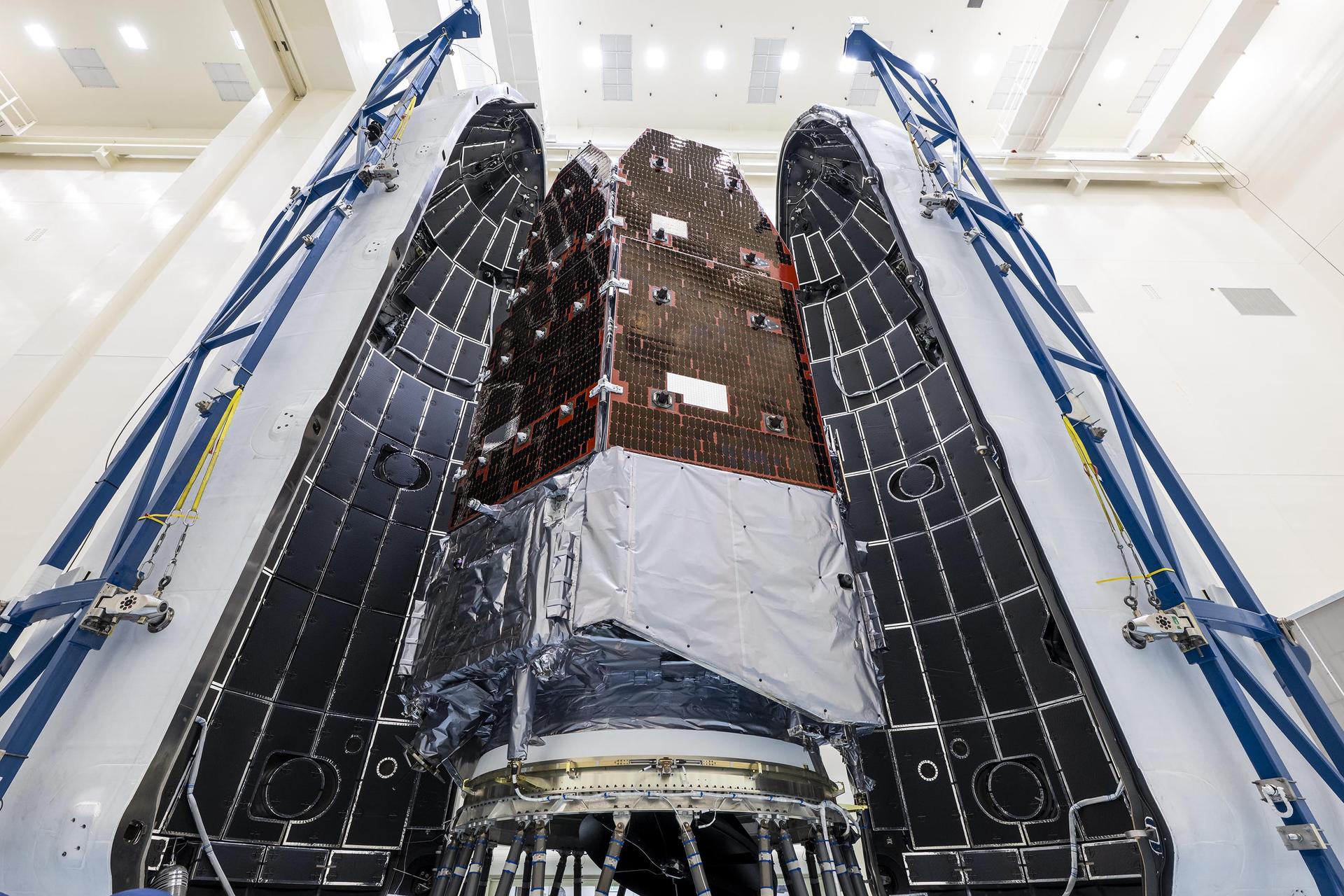
Inside the Payload Hazardous Servicing Facility at NASA's Kennedy Space Center, technicians secure the fairing halves around the Nancy Grace Roman Space Telescope. Engineered with a 2.4-meter primary mirror and a field of view 100 times larger than Hubble, Roman will deploy to Lagrange Point 2 aboard a Falcon Heavy to conduct wide-field infrared surveys of dark energy and exoplanets.
The Rare Earth Physics Powering Global Fiber Networks
An emerald laser illuminates a spool of optical fiber on a precision test bench, demonstrating the core physics of light amplification. Silica fiber doped with rare-earth elements like erbium enables optical signals to travel thousands of miles without electronic regeneration, forming the backbone of high-speed global telecommunications and data infrastructure.
The Eagle Nebula Observed by WISE
The dusty face of the Eagle Nebula and its surroundings are revealed in this image based on data from NASA's Wide Field Survey Explorer (WISE). WISE detects infrared light, or a range of wavelengths longer than what the human eye can see. This large star forming region is about 5,700 light years away from Earth and is most famous for being home to the the "Pillars of Creation," a region famously imaged by NASA's Hubble and James Webb space telescopes. The WISE data reveals the entire structure o.
JWST's First Full-Color Images
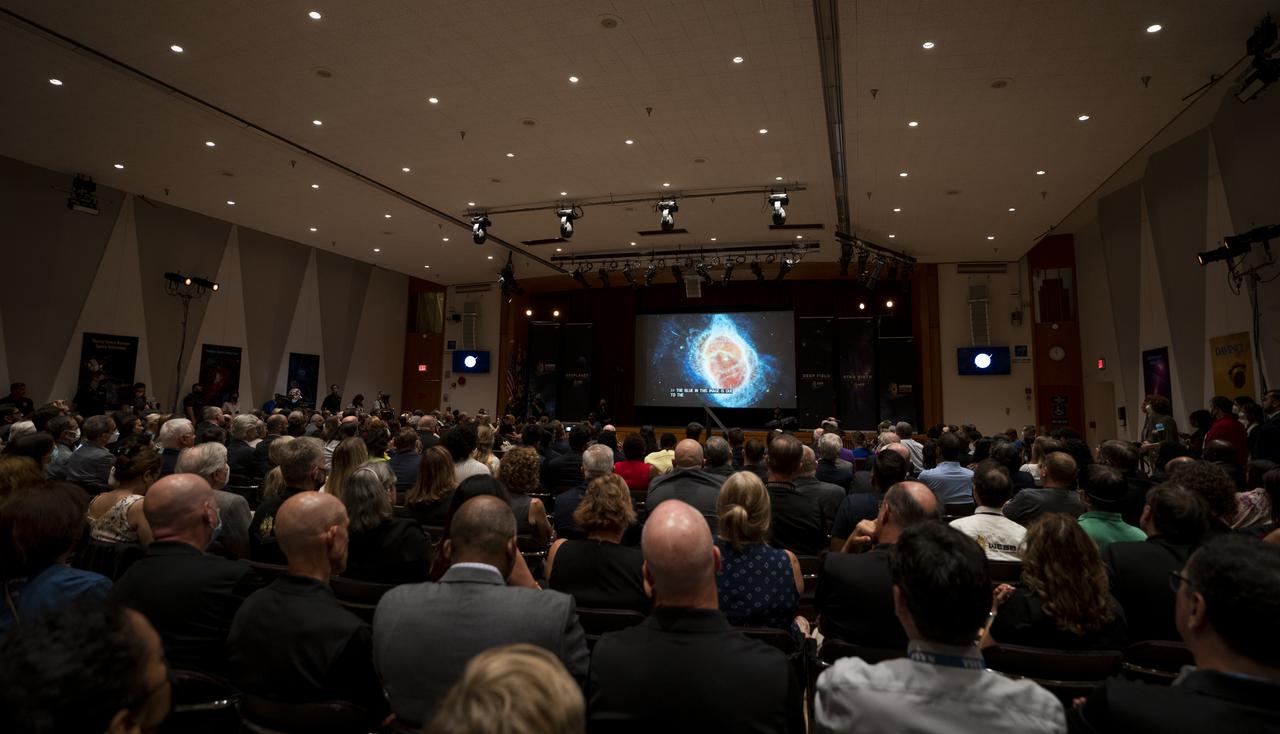
One of the images captured by NASA's James Webb Space Telescope of the planetary nebula cataloged as NGC 3132, and known informally as the Southern Ring Nebula, is seen on a screen as members of the media and guests watch the broadcast releasing the first full-color images from NASA's James Webb Space Telescope, Tuesday, July 12, 2022, at NASA's Goddard Space Flight Center in Greenbelt, Md. The first full-color images and spectroscopic data from the James Webb Space Telescope, a partnership with.
Perseverance's Route to the Delta
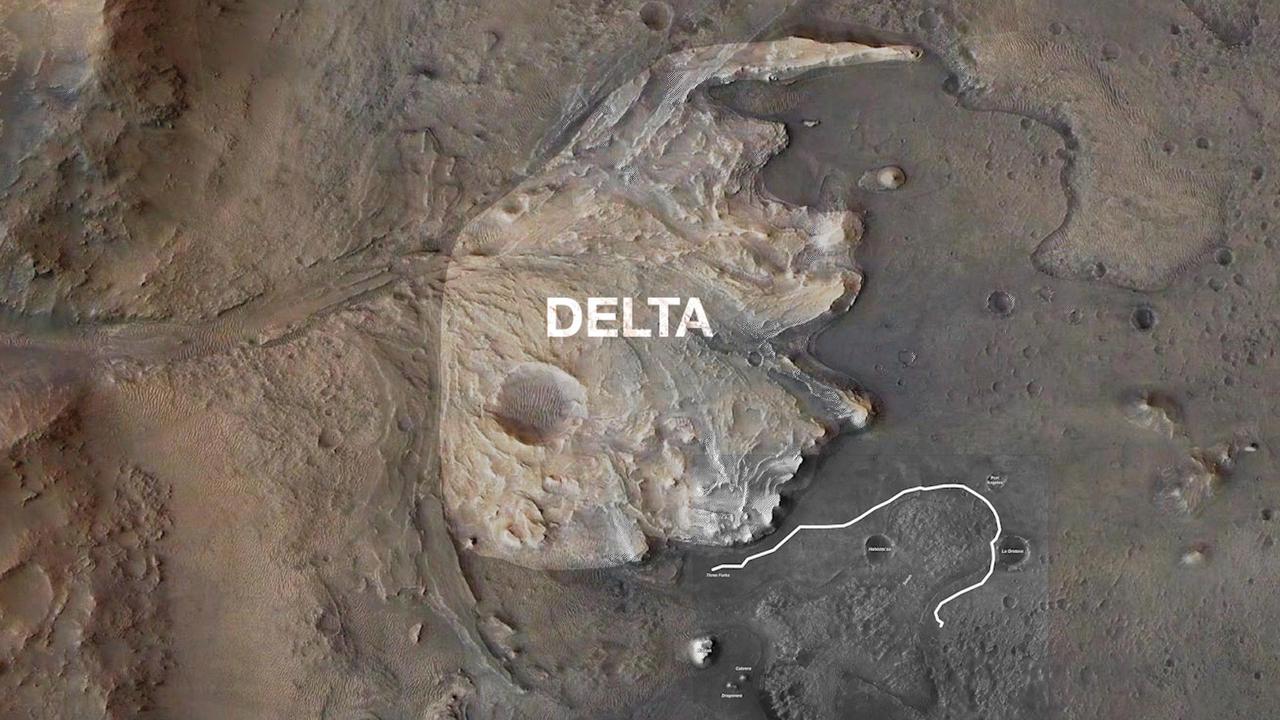
NASA's Perseverance Mars rover will follow the proposed route to Jezero Crater's delta shown in this annotated animated GIF. The delta is one the most important locations the rover will visit as it seeks signs of ancient life on Mars. This map includes data from the HiRISE camera aboard NASA's Mars Reconnaissance Orbiter. A key objective for Perseverance's mission on Mars is astrobiology, including the search for signs of ancient microbial life. The rover will characterize the planet's geology a.
Curiosity Rover on Mount Sharp, Seen from Mars Orbit
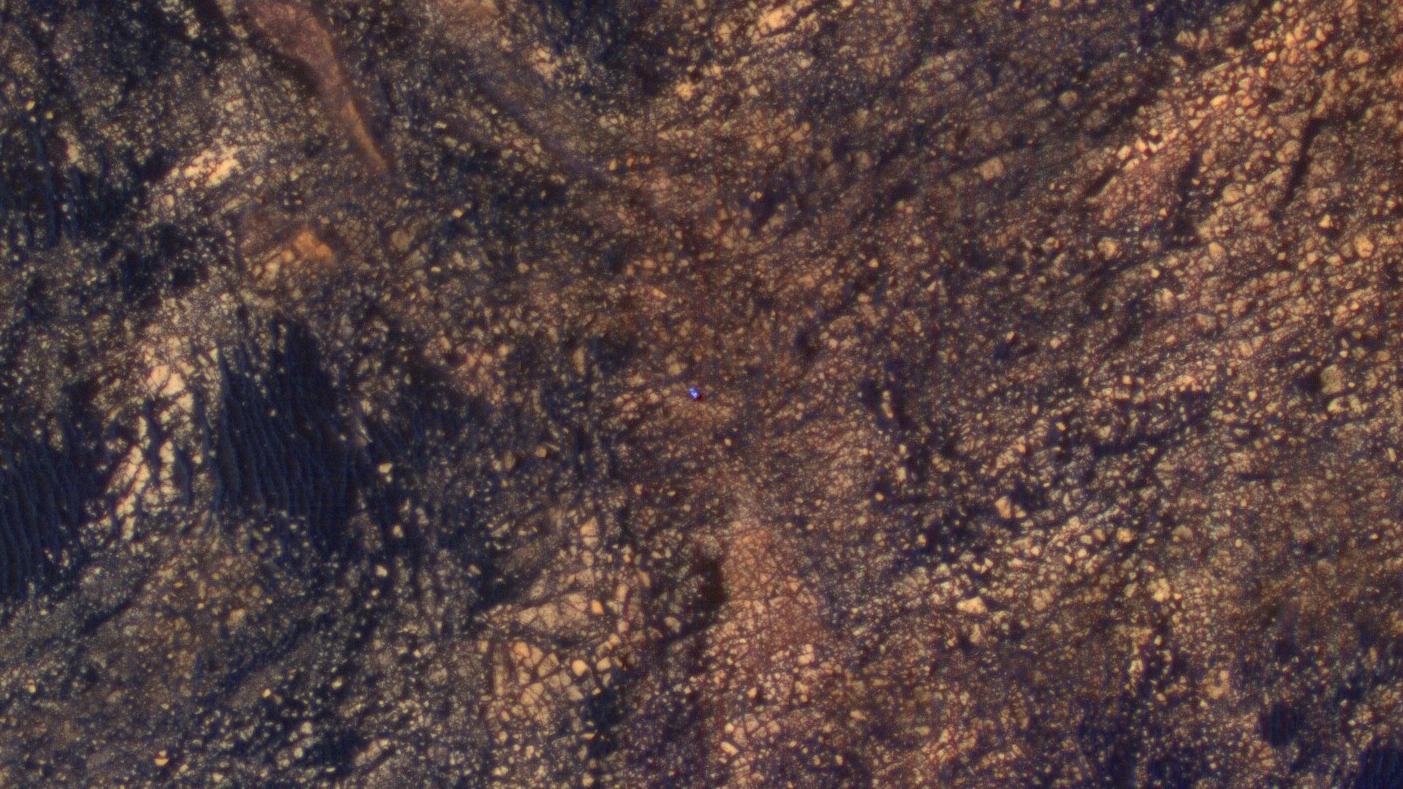
The feature that appears bright blue at the center of this scene is NASA's Curiosity Mars rover on the northwestern flank of Mount Sharp, viewed by NASA's Mars Reconnaissance Orbiter. Curiosity is approximately 10 feet long and 9 feet wide (3.0 meters by 2.8 meters). The view is a cutout from observation ESP_050897_1750 taken by the High Resolution Imaging Science Experiment (HiRISE) camera on the orbiter on June 5, 2017. HiRISE has been imaging Curiosity about every three months, to monitor the.
James Webb Space Telescope Launch
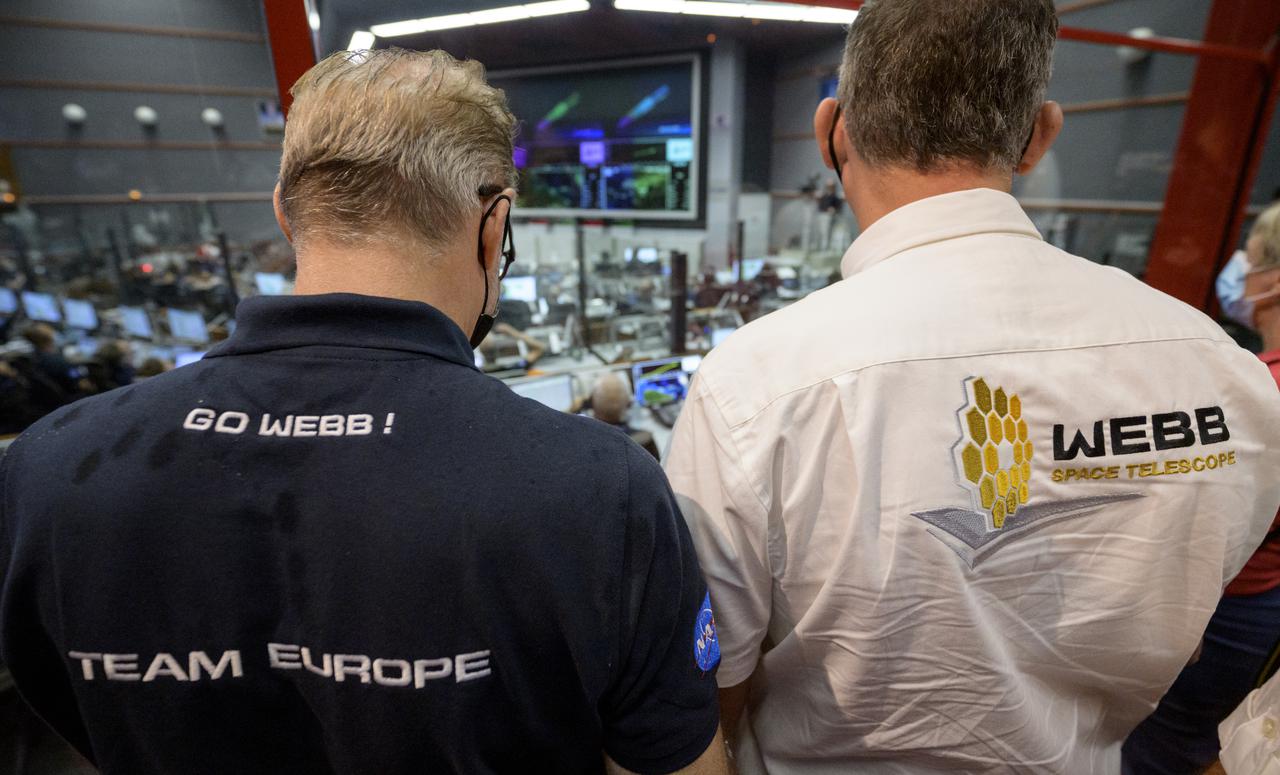
ESA (European Space Agency) Director-General Dr. Josef Aschbacher, left, and NASA Associate Administrator for the Science Mission Directorate Thomas Zurbuchen, monitor the progress of the Ariane 5 rocket delivering the James Webb Space Telescope into space, Saturday, Dec. 25, 2021, in the Jupiter Hall of the Guiana Space Centre in Kourou, French Guiana. The James Webb Space Telescope (sometimes called JWST or Webb) is a large infrared telescope with a 21.3 foot (6.5 meter) primary mirror. The ob.
Wernher von Braun
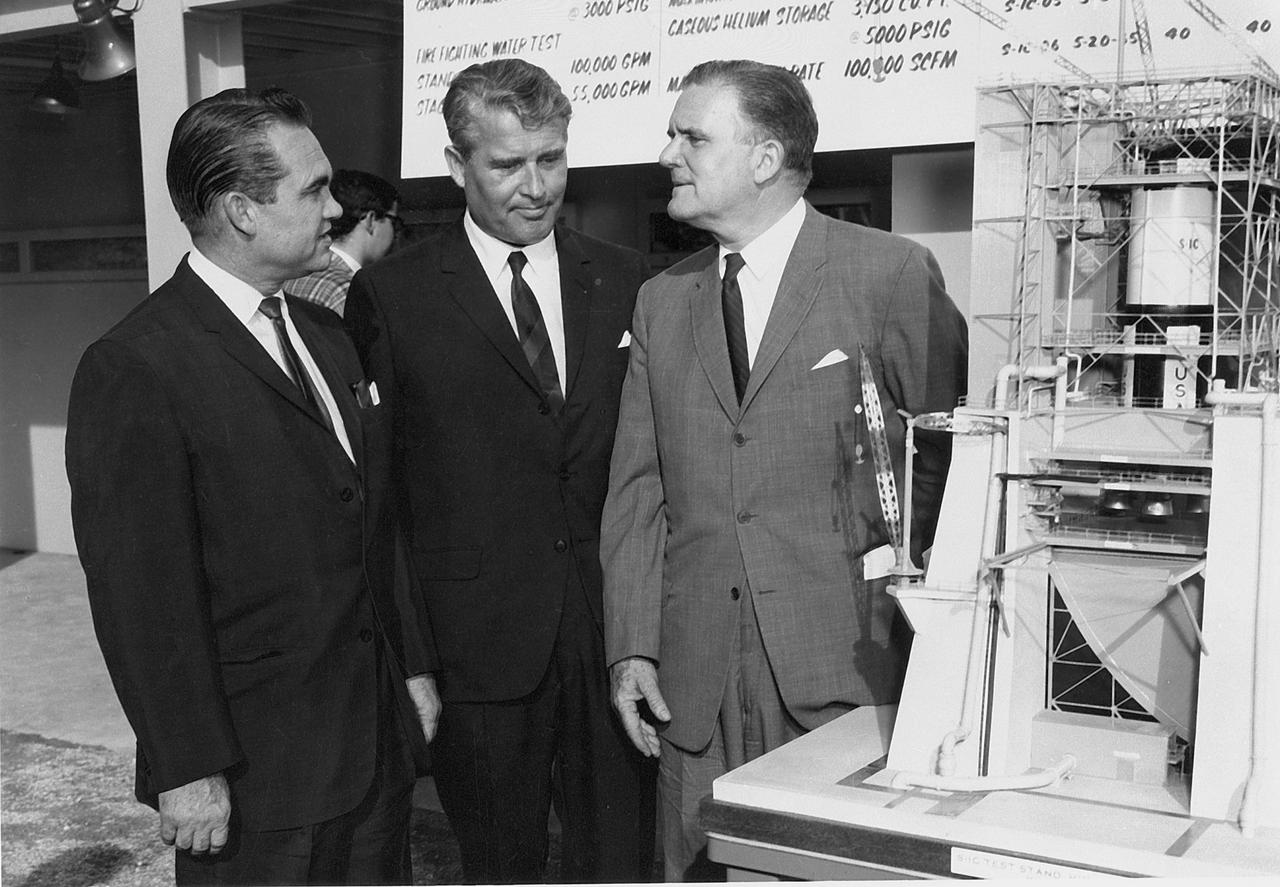
In this photograph are Alabama Governor George Wallace (left), Marshall Space Flight Center Dr. Wernher von Braun (Center) and NASA Administrator James Webb (right). Governor Wallace and Dr. Webb were at MSFC to witness the first test firing of a Saturn V Booster, along with members of the Alabama legislature and press reporters.
Orion Nebula and Bow Shock
Astronomers using NASA Hubble Space Telescope have found a bow shock around a very young star in the nearby Orion nebula, an intense star-forming region of gas and dust.
Most Detailed Image of the Crab Nebula
The Crab Nebula is one of the most intricately structured and highly dynamical objects ever observed. The new Hubble image of the Crab was assembled from 24 individual exposures taken with the NASA/ESA Hubble Space Telescope.
Hubble's High-Definition Panoramic View of the Andromeda Galaxy
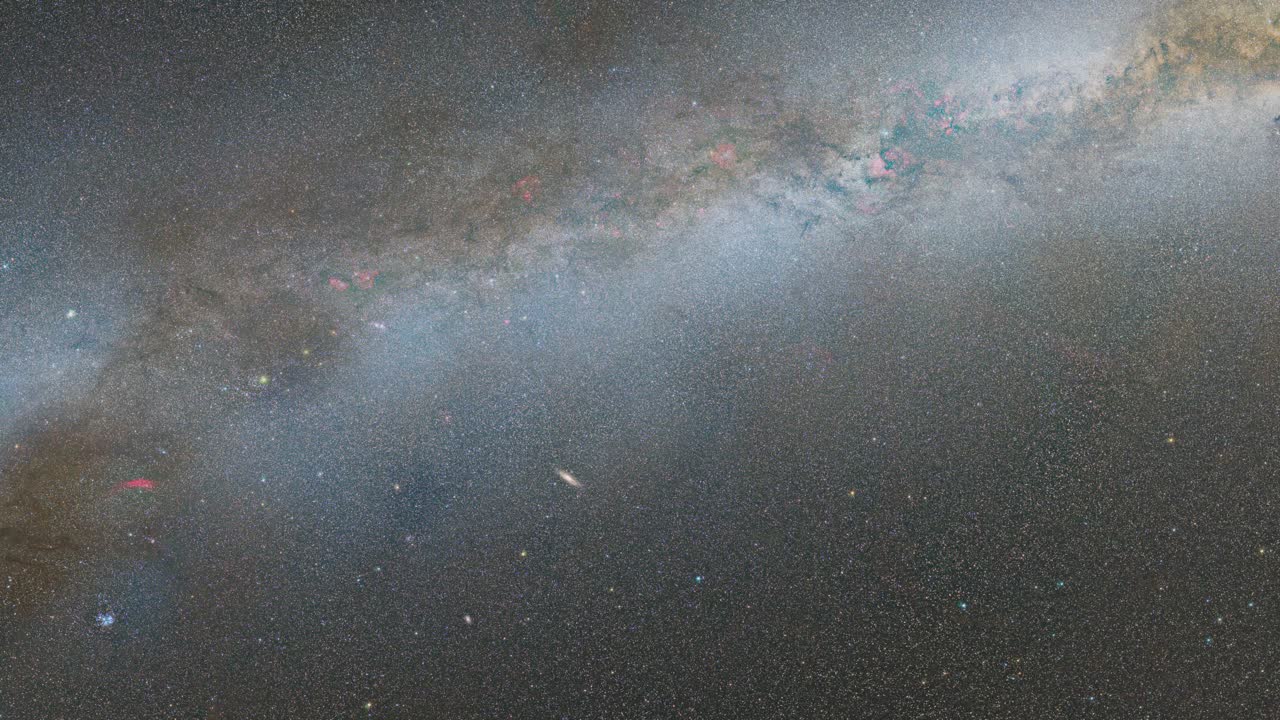
Zoom into the Andromeda galaxy. The largest NASA Hubble Space Telescope image ever assembled, this sweeping view of a portion of the Andromeda galaxy (M31) is the sharpest large composite image ever taken of our galactic neighbor. Though the galaxy is over 2 million light-years away, the Hubble telescope is powerful enough to resolve individual stars in a 61,000-light-year-long section of the galaxy's pancake-shaped disk. It's like photographing a beach and resolving individual grains of sand. A.
History of Hubble Space Telescope (HST)
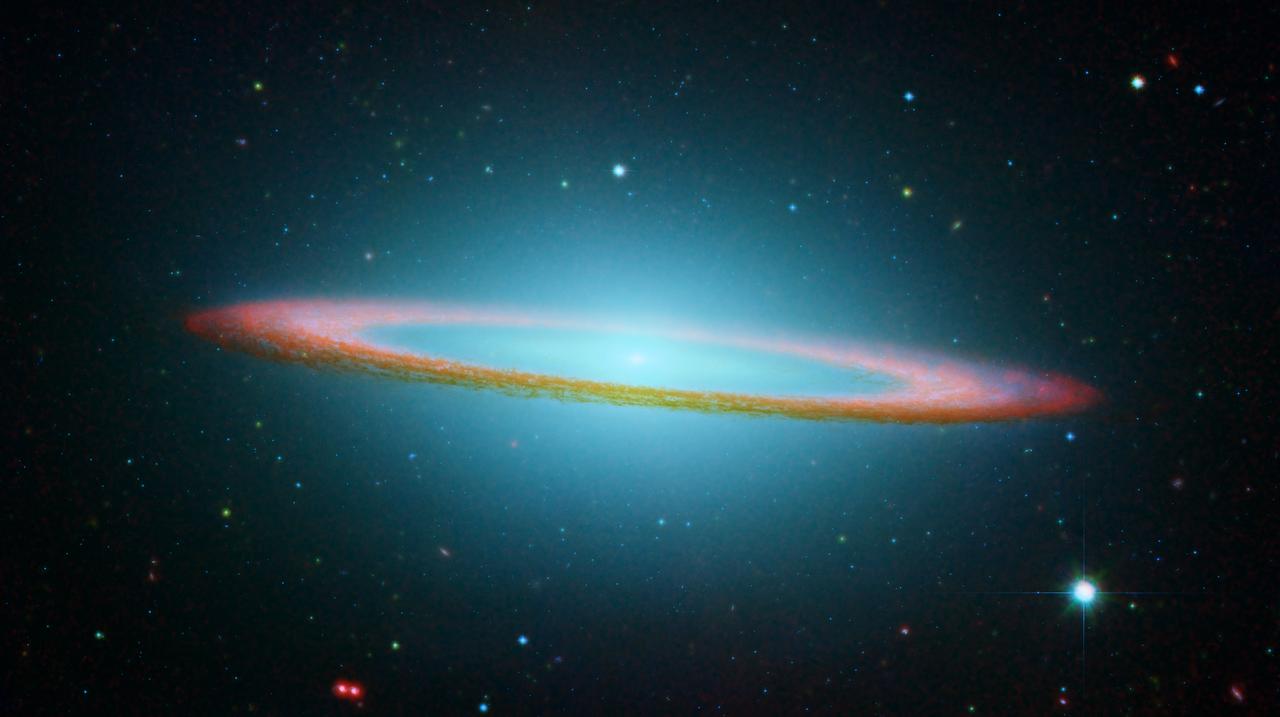
The razor sharp eye of the Hubble Space Telescope (HST) easily resolves the Sombrero galaxy, Messier 104 (M104). 50,000 light-years across, the galaxy is located 28 million light-years from Earth at the southern edge of the rich Virgo cluster of galaxies. Equivalent to 800 billion suns, Sombrero is one of the most massive objects in that group. The hallmark of Sombrero is a brilliant white, bulbous core encircled by the thick dust lanes comprising the spiral structure of the galaxy. As seen from.
Whirlpool Galaxy
The image from NASA Hubble Telescope shows spiral arms and dust clouds in the nearby Whirlpool galaxy. Visible starlight and light from the emission of glowing hydrogen is seen, which is associated with the most luminous young stars in the spiral arms.
Hubble Captures Spectacular "Landscape" in the Carina Nebula
NASA image release April 22, 2010 NASA's Hubble Space Telescope captured this billowing cloud of cold interstellar gas and dust rising from a tempestuous stellar nursery located in the Carina Nebula, 7,500 light-years away in the southern constellation Carina. This pillar of dust and gas serves as an incubator for new stars and is teeming with new star-forming activity. Hot, young stars erode and sculpt the clouds into this fantasy landscape by sending out thick stellar winds and scorching ultra.
Swimming in Sculptor
Peering deep into the early Universe, this picturesque parallel field observation from the NASA/ESA Hubble Space Telescope reveals thousands of colourful galaxies swimming in the inky blackness of space. A few foreground stars from our own galaxy, the Milky Way, are also visible. In October 2013 Hubble's Wide Field Camera 3 (WFC3) and Advanced Camera for Surveys (ACS) began observing this portion of sky as part of the Frontier Fields programme. This spectacular skyscape was captured during the s.
Unwrapping the Pillars
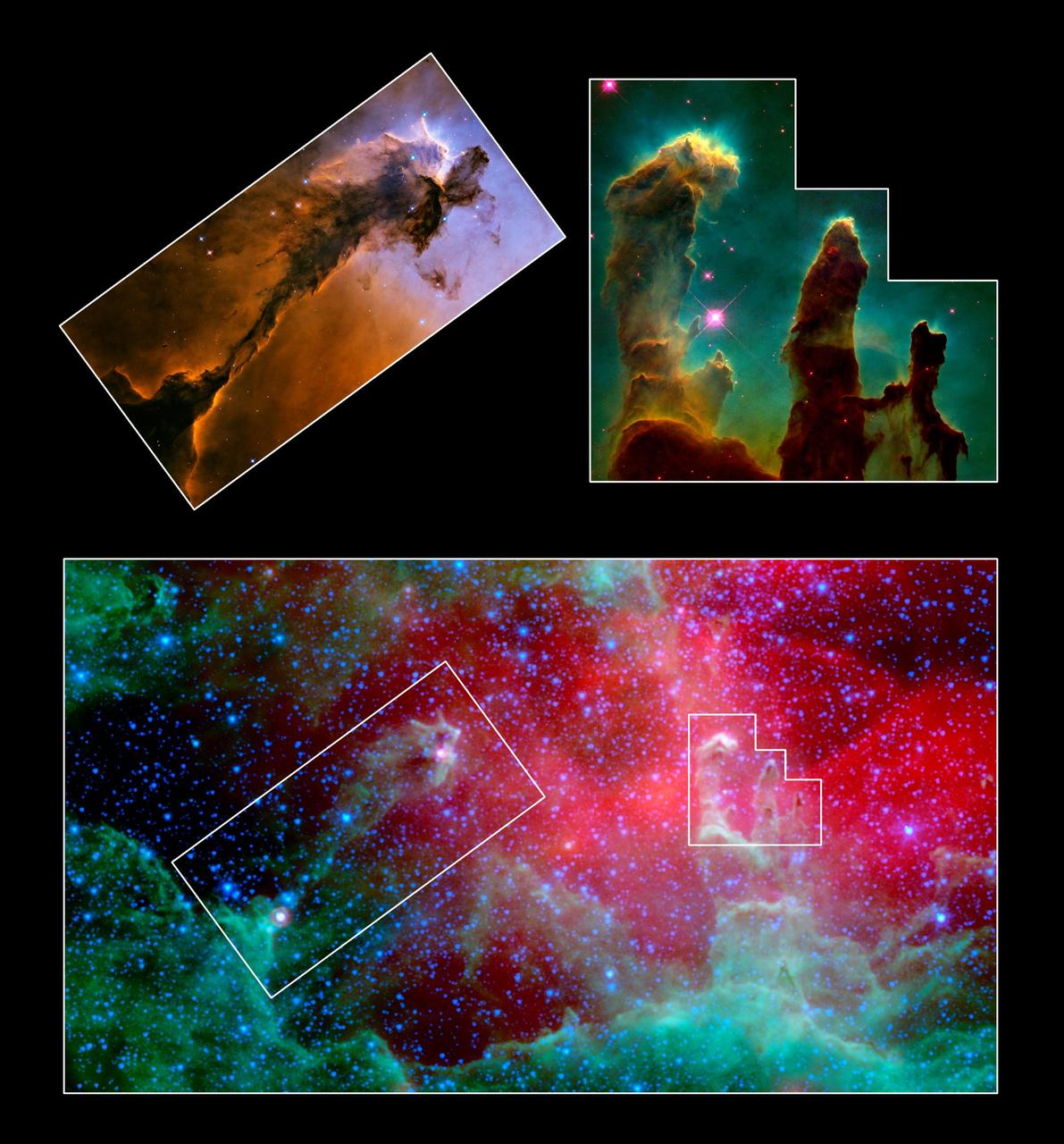
This image composite highlights the pillars of the Eagle nebula, as seen in infrared light by NASA Spitzer Space Telescope bottom and visible light by NASA Hubble Space Telescope top insets.
Tracing Titanium Escape
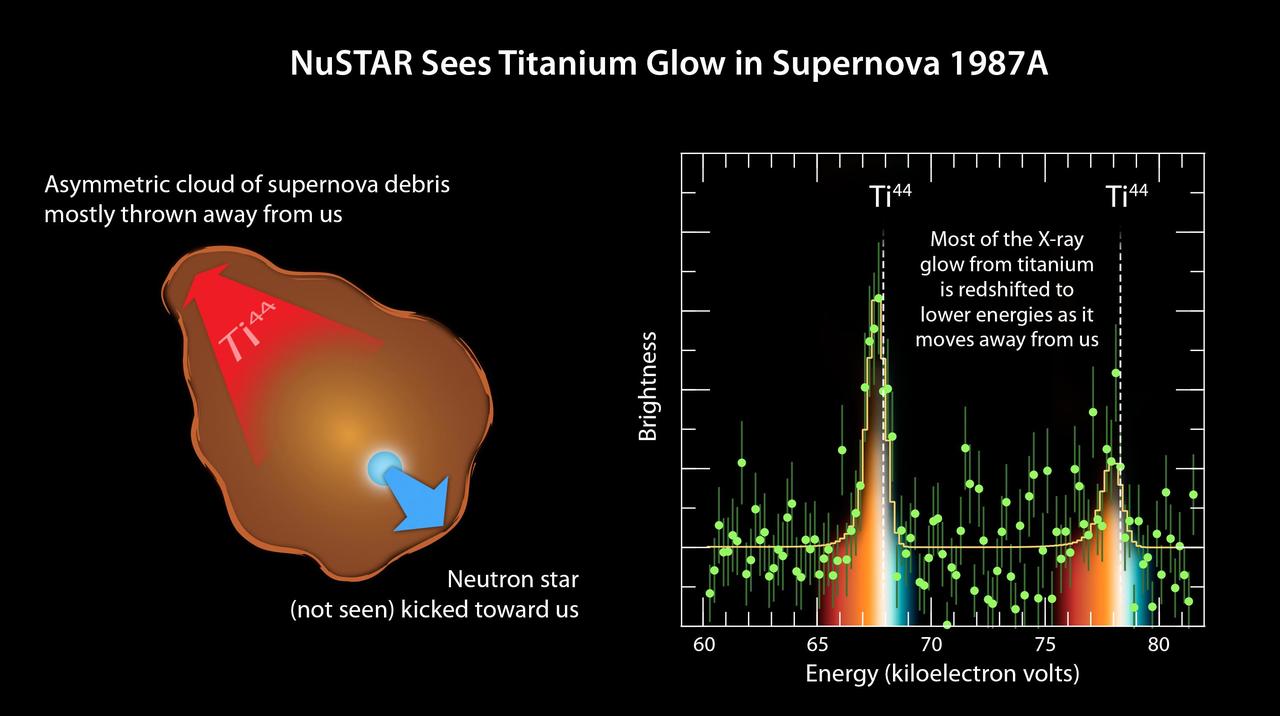
The plot of data from NASA's Nuclear Spectroscopic Telescope Array, or NuSTAR (right), amounts to a "smoking gun" of evidence in the mystery of how massive stars explode. The observations indicate that supernovae belonging to a class called Type II or core-collapse blast apart in a lopsided fashion, with the core of the star hurtling in one direction, and the ejected material mostly expanding the other way (see diagram in Figure 1). NuSTAR made the most precise measurements yet of a radioactive .
History of Chandra X-Ray Observatory
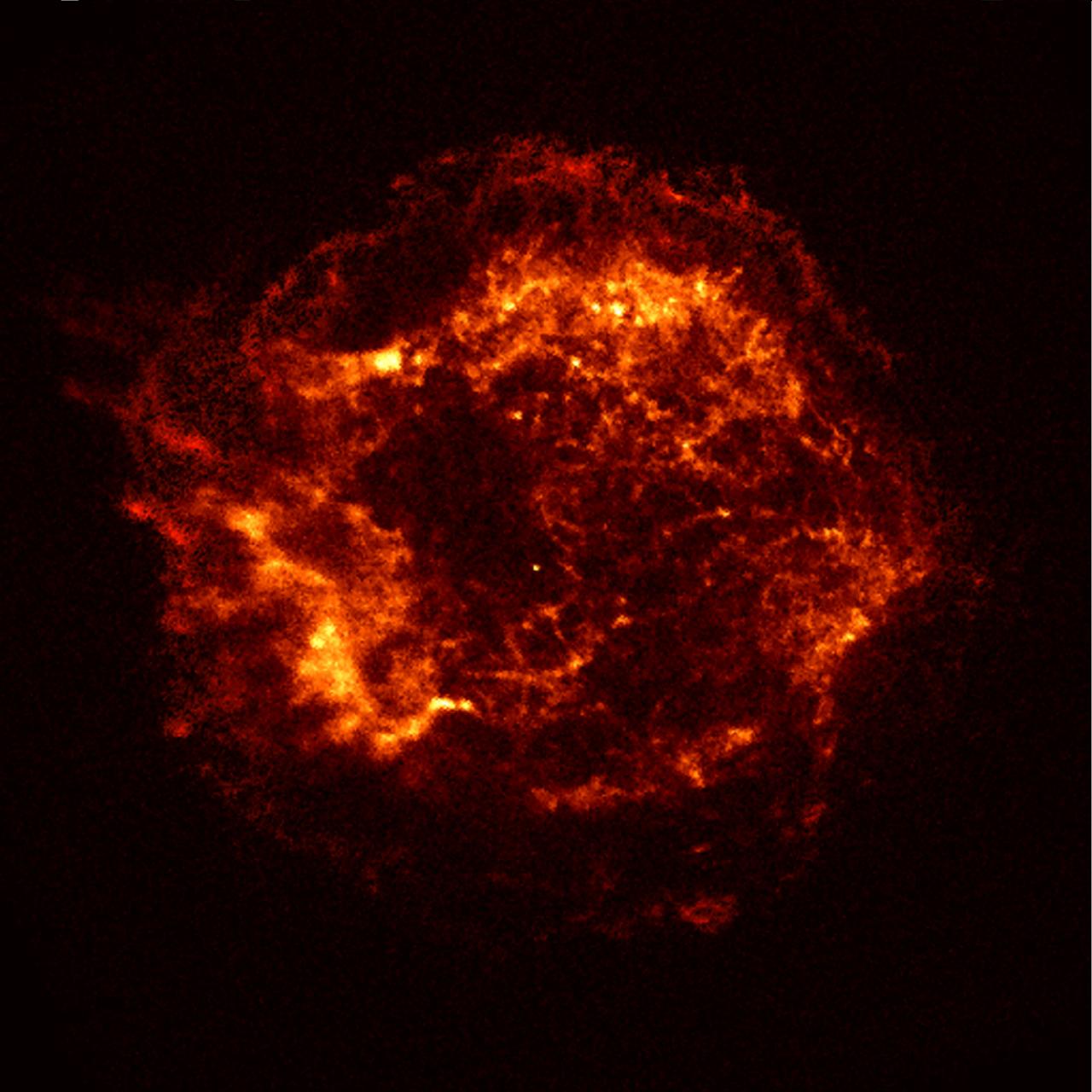
This x-ray image of the Cassiopeia A (CAS A) supernova remnant is the official first light image of the Chandra X-Ray Observatory (CXO). The 5,000-second image was made with the Advanced Charged Coupled Device (CCD) Image Spectrometer (ACIS). Two shock waves are visible: A fast outer shock and a slower irner shock. The inner shock wave is believed to be due to the collision of ejecta from the supernova explosion with a circumstellar shell of material, heating it to a temperature of 10 million-de.
GSFC_20250702_RST_037546
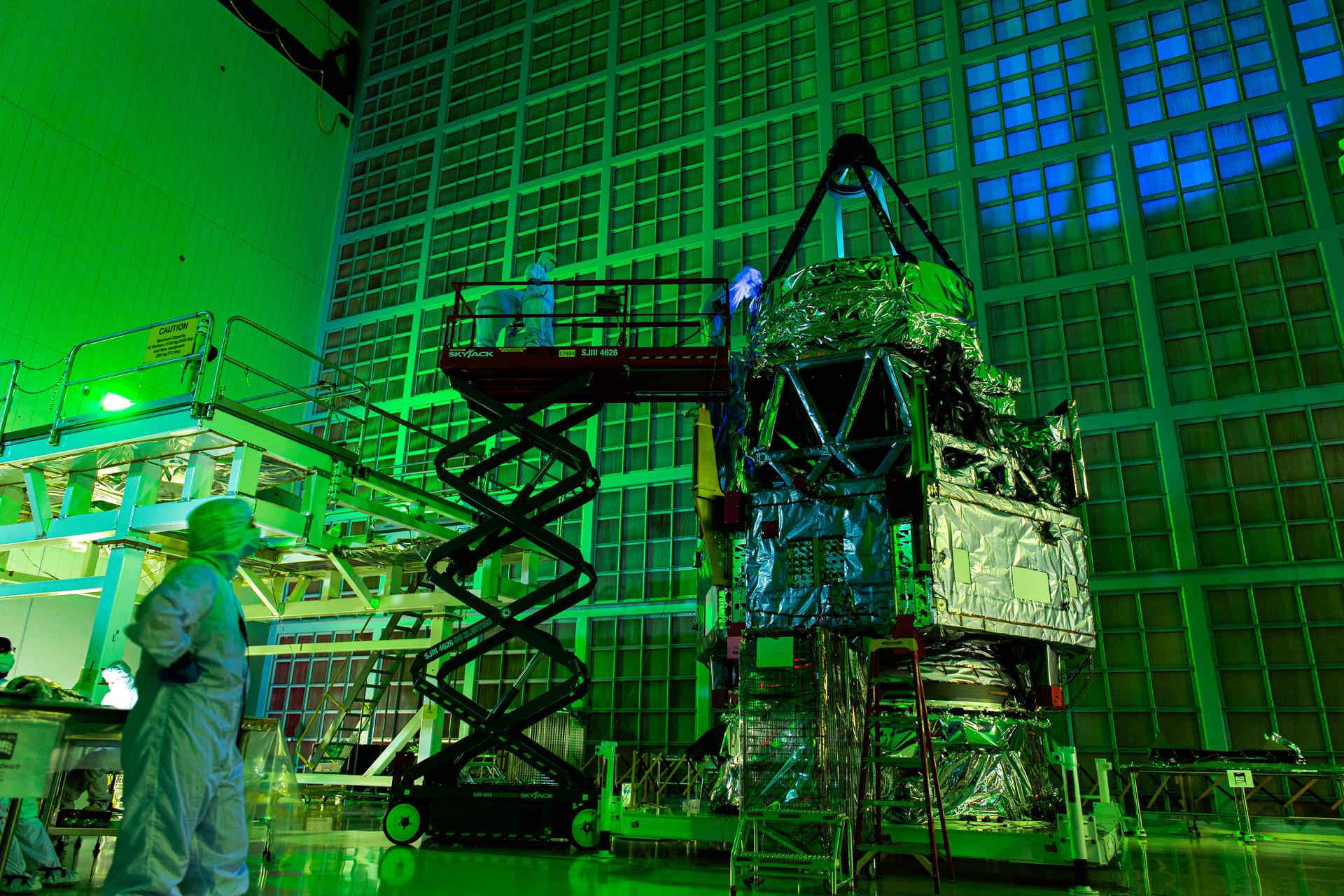
Roman Space Telescope team members inspect the primary mirror in the dark using flashlights and UV lights to help them see any contamination, inside the cleanroom at Goddard Space Flight Center, Greenbelt Md., July 2, 2025. The green glow of the room is due to a long exposure time, the green comes from a light on the left wall which indicates optimal airflow through the room. This photo has been approved for public release. NASA/Mike Guinto.
Europa Clipper's Thermal Tubing
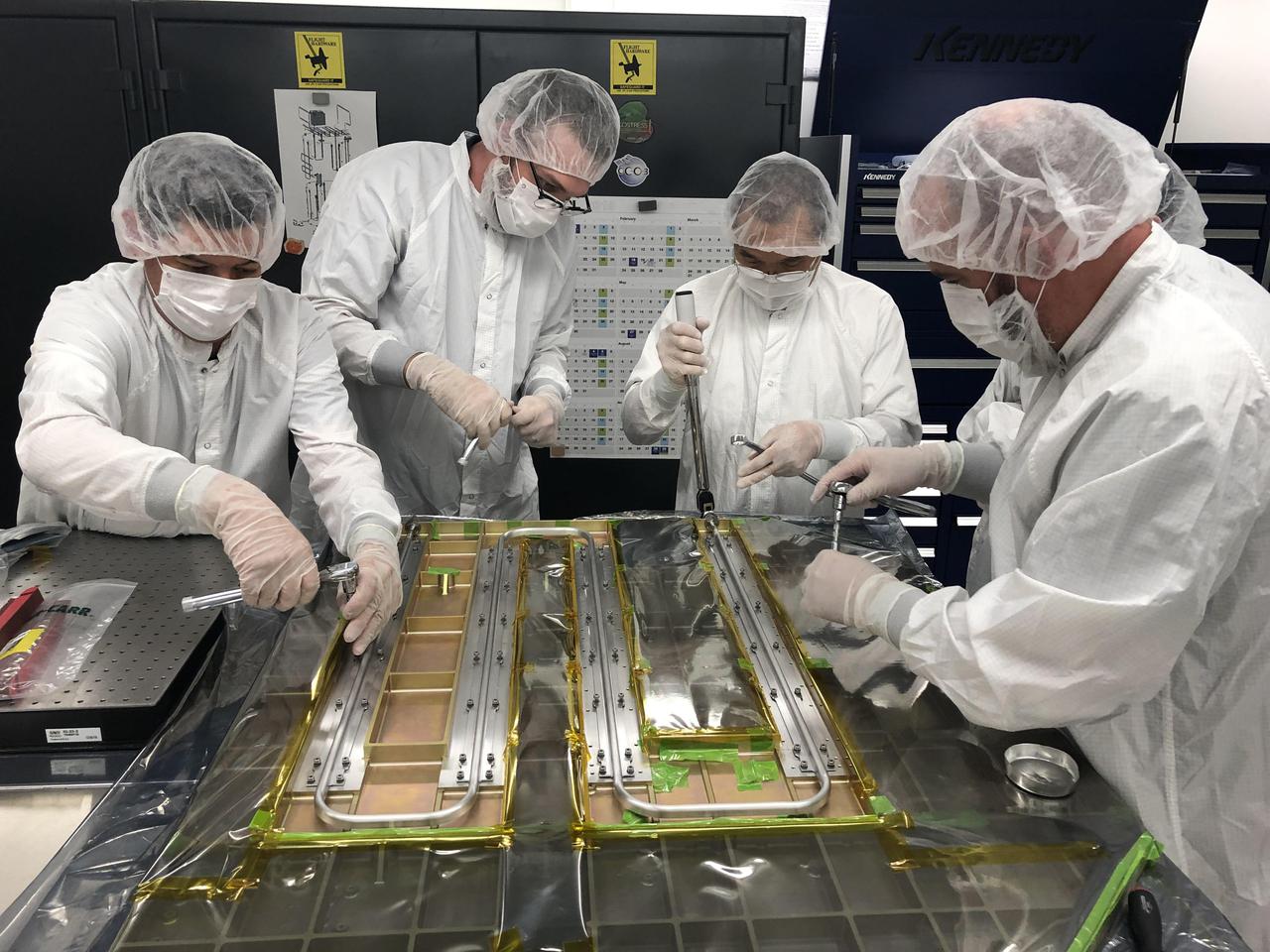
Europa Clipper technicians and engineers at NASA's Jet Propulsion Laboratory in Southern California work together in a cleanroom on Sept. 12, 2019. They bond thermal tubing to the spacecraft's Radio Frequency (RF) panel, which was built by Johns Hopkins University Applied Physics Laboratory (APL) in Laurel, Maryland. The tubing is part of a Heat Redistribution System (HRS) that pumps coolant all around the spacecraft and helps control its temperature as it travels through space. With an internal.
Moon Seen behind Full Artemis II Stack at Launch Pad 39B
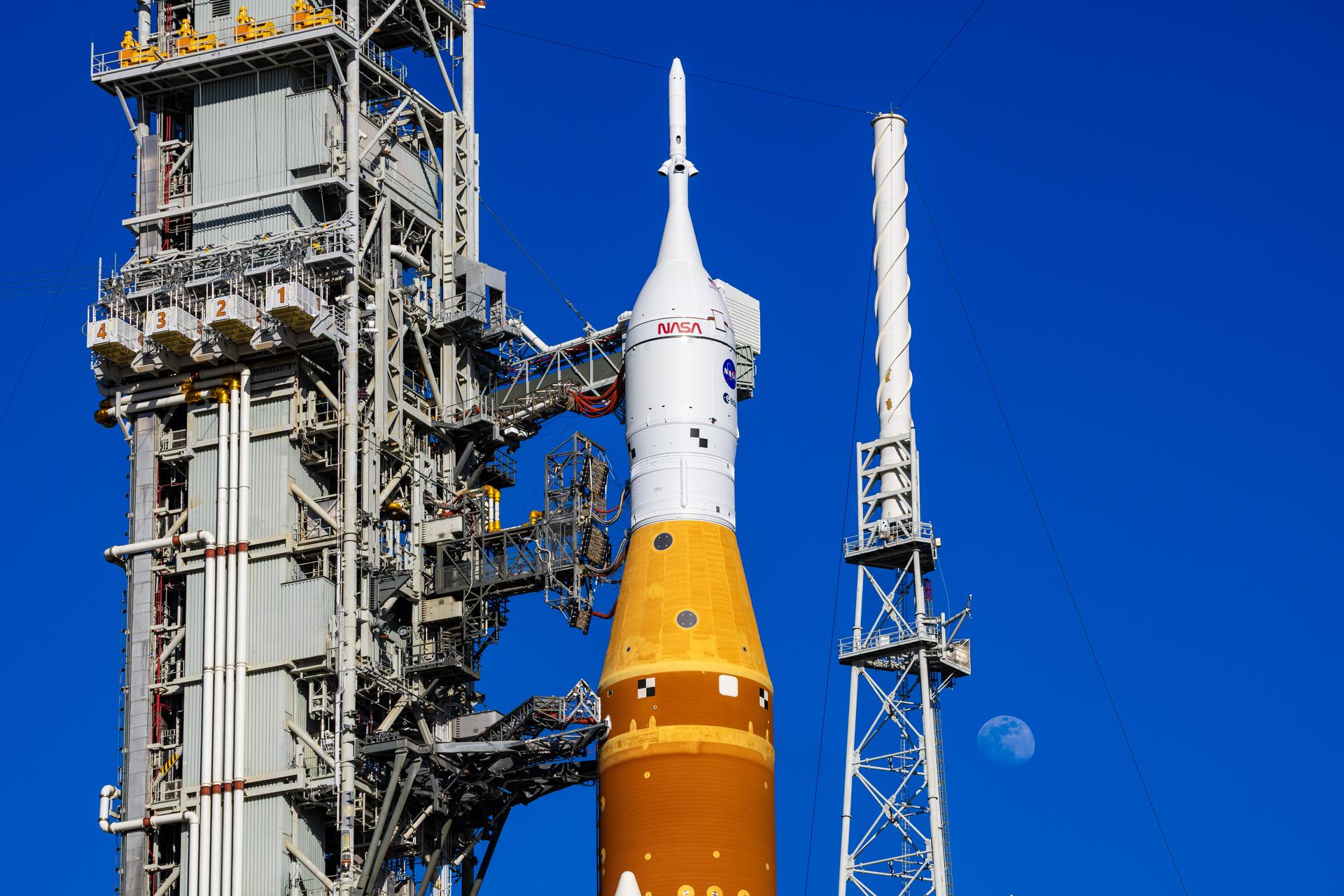
The Moon is seen behind the SLS (Space Launch System) and Orion spacecraft, atop the mobile launcher on January 28, 2026. The rocket is currently at Launch Pad 39B at NASA's Kennedy Space Center in Florida, as teams are preparing for a wet dress rehearsal to practice timelines and procedures for the launch of Artemis II. 508 Description:The Moon is seen shining over the SLS (Space Launch System) and Orion spacecraft, atop the mobile launcher on January 29, 2026. The rocket is currently at Launch.
Parker Solar Probe Antenna Deployment
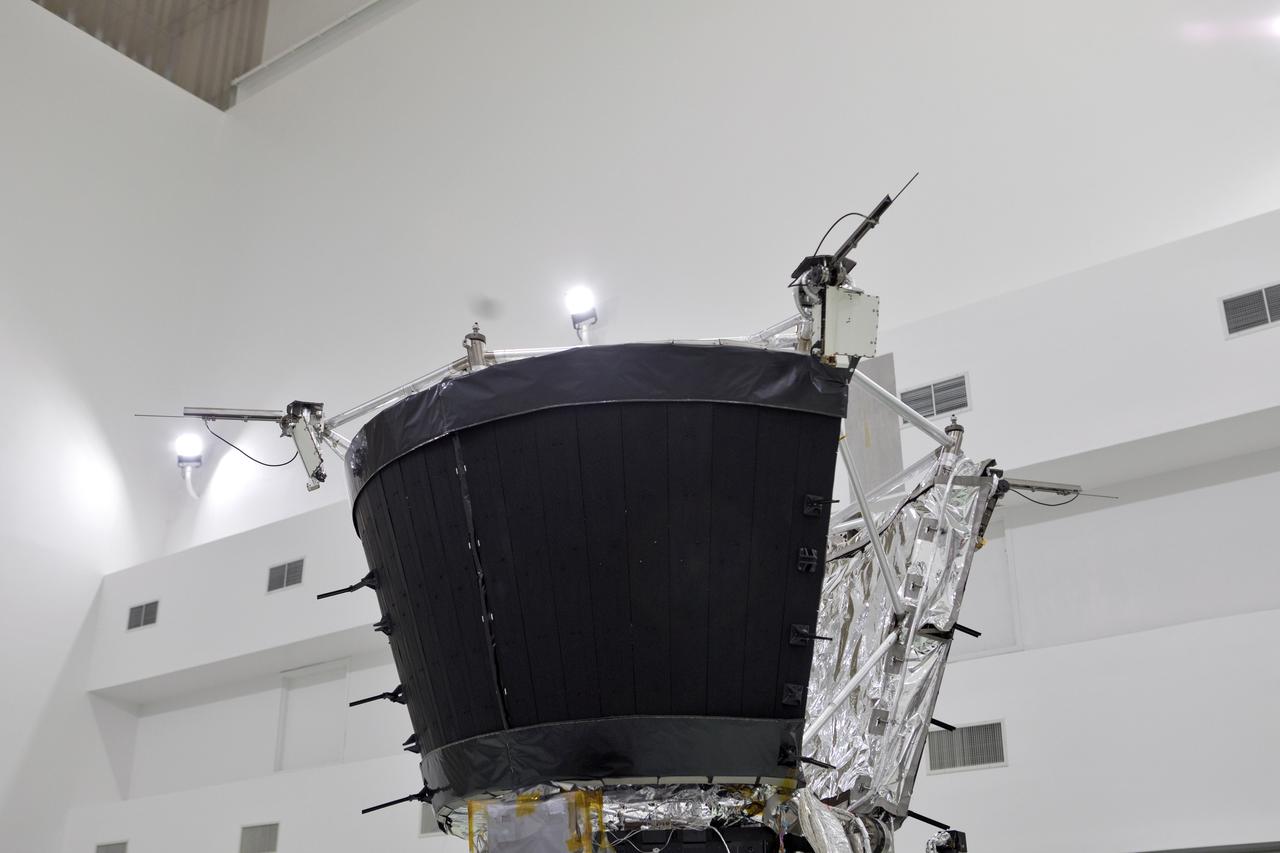
Antenna's on NASA's Parker Solar Probe are deployed for testing at the Astrotech processing facility in Titusville, Florida, near NASA's Kennedy Space Center on Thursday, April 19, 2018. The Parker Solar Probe will launch on a United Launch Alliance Delta IV Heavy rocket from Space Launch Complex 37 at Cape Canaveral Air Force Station in Florida no earlier than Aug. 4, 2018. The mission will perform the closest-ever observations of a star when it travels through the Sun's atmosphere, called the .
Earth Science
Solar Vector Magnetograph is used to predict solar flares, and other activities associated with sun spots. This research provides new understanding about weather on the Earth, and solar-related conditions in orbit.
Lucy Spacecraft Rotation
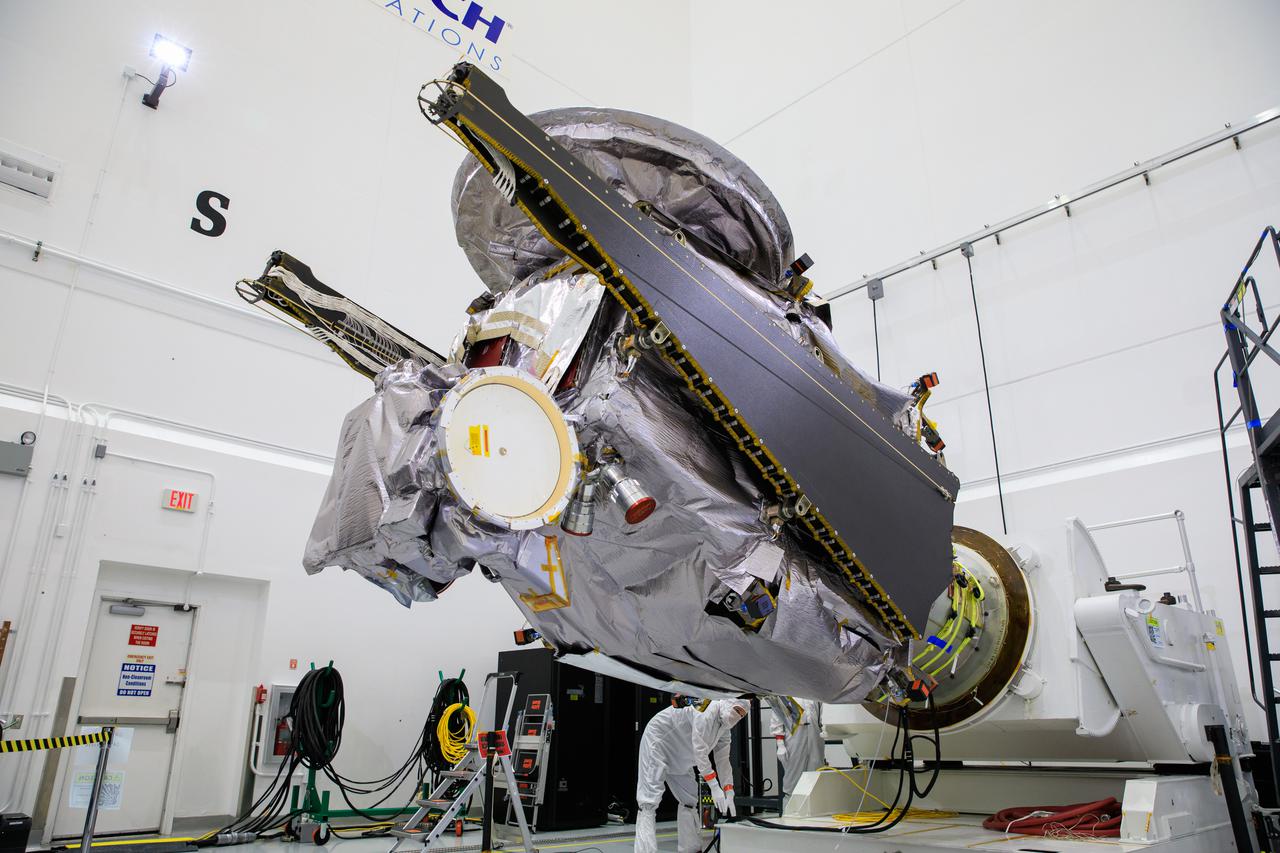
NASA's Lucy spacecraft is moved to the horizontal position on a rotation stand inside the Astrotech Space Operations Facility in Titusville, Florida, on Sept. 1, 2021. In view, the high gain antenna and solar arrays have been installed on the Lucy spacecraft. Lucy is scheduled to launch no earlier than Saturday, Oct. 16, on a United Launch Alliance Atlas V 401 rocket from Launch Pad 41 at Cape Canaveral Space Force Station. NASA's Launch Services Program based at Kennedy Space Center is managing.
Hubble Captures Spectacular "Landscape" in the Carina Nebula
NASA image release April 22, 2010 NASA's Hubble Space Telescope captured this billowing cloud of cold interstellar gas and dust rising from a tempestuous stellar nursery located in the Carina Nebula, 7,500 light-years away in the southern constellation Carina. This pillar of dust and gas serves as an incubator for new stars and is teeming with new star-forming activity. Hot, young stars erode and sculpt the clouds into this fantasy landscape by sending out thick stellar winds and scorching ultr.
High-resolution imaging reveals critical astrophysical structures and elemental distribution.
Next-generation observatories will conduct deeper spectroscopic surveys.
History of Hubble Space Telescope (HST)
The razor sharp eye of the Hubble Space Telescope (HST) easily resolves the Sombrero galaxy, Messier 104 (M104). 50,000 light-years across, the galaxy is located 28 million light-years from Earth at the southern edge of the rich Virgo cluster of galaxies. Equivalent to 800 billion suns, Sombrero is one of the most massive objects in that group. The hallmark of Sombrero is a brilliant white, bulbous core encircled by the thick dust lanes comprising the spiral structure of the galaxy. As seen from.
High-resolution imaging reveals critical astrophysical structures and elemental distribution.
Next-generation observatories will conduct deeper spectroscopic surveys.
History of Chandra X-Ray Observatory
This x-ray image of the Cassiopeia A (CAS A) supernova remnant is the official first light image of the Chandra X-Ray Observatory (CXO). The 5,000-second image was made with the Advanced Charged Coupled Device (CCD) Image Spectrometer (ACIS). Two shock waves are visible: A fast outer shock and a slower irner shock. The inner shock wave is believed to be due to the collision of ejecta from the supernova explosion with a circumstellar shell of material, heating it to a temperature of 10 million-de.
High-resolution imaging reveals critical astrophysical structures and elemental distribution.
Next-generation observatories will conduct deeper spectroscopic surveys.
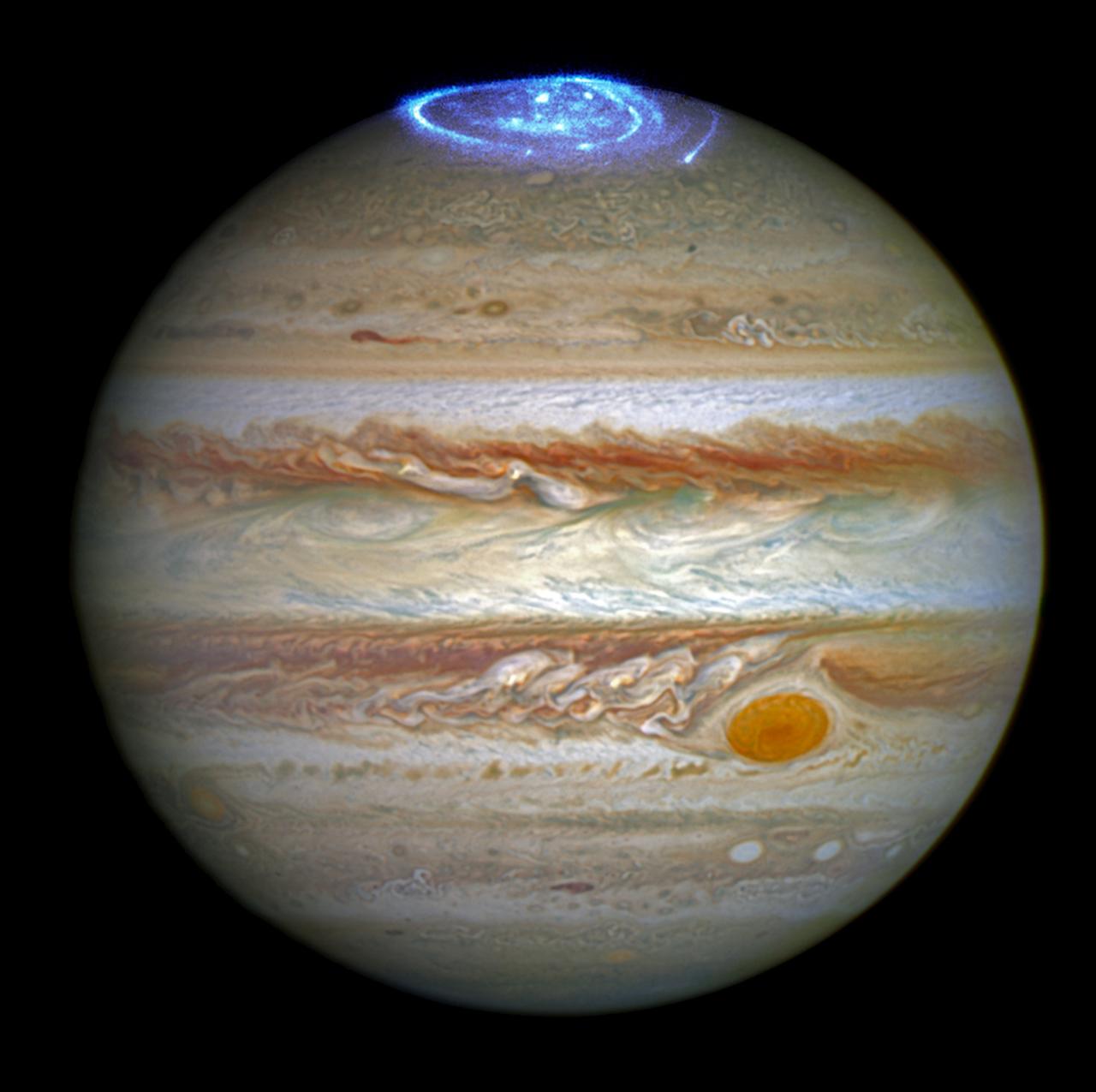
Hubble Captures Vivid Auroras in Jupiter's Atmosphere
Astronomers are using the NASA/ESA Hubble Space Telescope to study auroras — stunning light shows in a planet's atmosphere — on the poles of the largest planet in the solar system, Jupiter. This observation program is supported by measurements made by NASA's Juno spacecraft, currently on its way to Jupiter. Jupiter, the largest planet in the solar system, is best known for its colorful storms, the most famous being the Great Red Spot. Now astronomers have focused on another beautiful feature of.
High-resolution imaging reveals critical astrophysical structures and elemental distribution.
Next-generation observatories will conduct deeper spectroscopic surveys.
Hubble Provides Clear Images of Saturn Aurora
Hubble Provides Clear Images of Saturn Aurora.
High-resolution imaging reveals critical astrophysical structures and elemental distribution.
Next-generation observatories will conduct deeper spectroscopic surveys.
New Horizons Sees Pluto
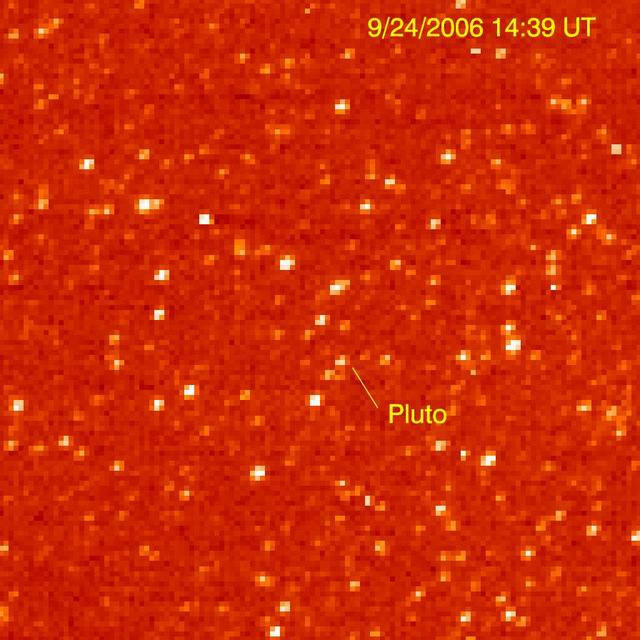
The Long Range Reconnaissance Imager on NASA New Horizons acquired images of the Pluto field three days apart in late September 2006, in order to see Pluto motion against a dense background of stars.
High-resolution imaging reveals critical astrophysical structures and elemental distribution.
Next-generation observatories will conduct deeper spectroscopic surveys.