Humanity has officially entered a “new reality,” a stark warning issued today by scientists who confirm our planet has now crossed the first of several critical Earth system tipping points. This declaration, from a major report released by the University of Exeter and international collaborators, underscores an urgent imperative: without immediate, global action, these profound shifts threaten widespread and lasting damage across ecosystems and human societies. The time for debate has passed; the era of consequences has begun.
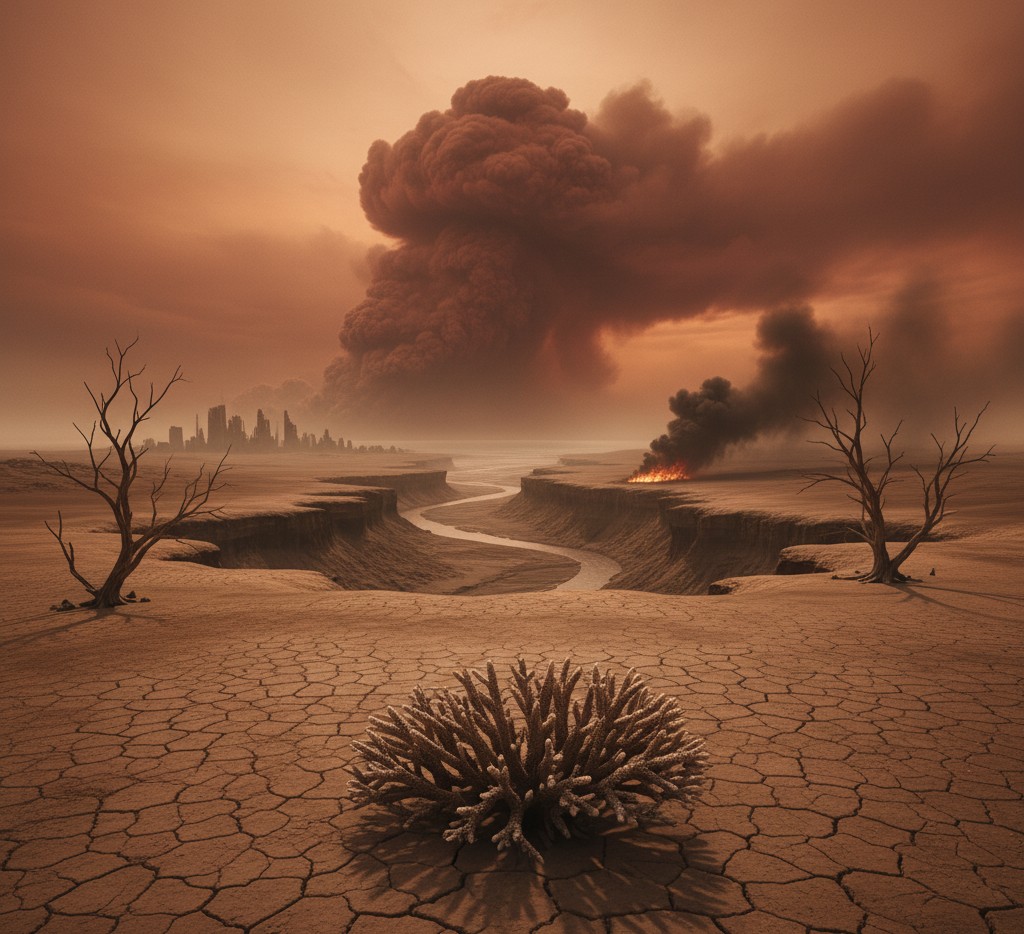
Among the most devastating findings of the second Global Tipping Points Report is the definitive crossing of a critical threshold for warm-water coral reefs. These vibrant underwater cities, which sustain nearly a billion people and a quarter of all marine species, are experiencing mass die-off on an unprecedented scale. Their intricate structures, vital for coastal protection, nutrient cycling, and biodiversity, are collapsing. The report concludes that, unless global warming is not only halted but actively reversed, the magnificent, expansive reef systems we know today will disappear. While a few isolated refuges might endure, their survival hinges on urgent, targeted protection efforts. This isn’t merely a decline; it’s a fundamental, irreversible alteration of a cornerstone marine ecosystem.
On the Precipice: Other Imminent Tipping Points
The collapse of warm-water coral reefs serves as a chilling harbinger of what lies ahead. Scientists warn that the world is rapidly approaching other irreversible tipping points, each carrying its own set of devastating consequences for both people and the natural world. These include the accelerated melting of the polar ice sheets, which directly contributes to global sea-level rise and disrupts crucial ocean currents that regulate global climate patterns. Further, the Amazon rainforest, often referred to as the “lungs of the Earth” and notably the host for the upcoming COP30 summit, is dangerously close to a systemic collapse. Such a shift would release vast quantities of stored carbon, accelerate global warming, and fundamentally alter regional and global weather systems, impacting everything from agriculture to freshwater availability. The interconnectedness of these systems means that triggering one tipping point increases the likelihood of others falling like dominoes, creating a cascade of environmental devastation.
The 1.5°C Imperative: Every Fraction Matters
The report’s release comes as global ministers prepare for the critical COP30 summit, a gathering increasingly overshadowed by the grim reality that global temperatures are expected to exceed the crucial 1.5°C warming limit. This threshold, widely recognized by the scientific community as a critical guardrail for planetary stability, is now being breached. The Global Tipping Points Report, a monumental effort compiled by 160 scientists across 87 institutions in 23 countries, provides an unequivocal message: every fraction of a degree and every additional year spent above 1.5°C dramatically amplifies the risks of triggering further irreversible changes. The scientific consensus is clear and resounding – there is no safe overshoot. Even temporary excursions above this limit can set in motion processes that cannot be undone.
Accelerating Action: Our Only Hope for a Liveable Future
The authors of this comprehensive report do not merely present a catalogue of impending doom; they deliver a powerful call to action. The best hope for humanity now lies in radically accelerating global efforts to decarbonize economies and achieve systemic transformation. This means not just reducing emissions, but pursuing rapid, large-scale deployment of renewable energy, investing in nature-based solutions, and fundamentally rethinking our consumption patterns. Governments, industries, and individuals must collaborate with unprecedented urgency and scale. The report implicitly urges world leaders at COP30 to translate these scientific warnings into concrete, ambitious policy commitments that prioritize the long-term health of the planet over short-term economic gains. Protecting the few remaining coral reef refuges, for instance, requires immediate, localized conservation paired with global climate mitigation.
Conclusion: Defining Our New Reality
The Global Tipping Points Report marks a pivotal moment in our understanding of climate change. It shifts the narrative from speculative future risks to present-day realities and imminent threats. The crossing of the first Earth system tipping point – the widespread collapse of warm-water coral reefs – is a tangible loss, one that resonates deeply both ecologically and economically. While the findings are dire, they are also a final, urgent call for a collective course correction. The “new reality” demands not despair, but decisive, immediate, and sustained global action. The window for preventing further irreversible damage is rapidly closing, and our ability to navigate this new climate landscape will define the future of our planet and generations to come.