In an era where data travels the globe at the speed of light, physical cargo still moves at a comparatively glacial pace. Yet, the moment a crisis strikes, or an urgent need arises, speed is paramount. Inversion, a relatively new player founded in early 2021, aims to bridge this gap, offering an “on-demand” delivery vehicle that could prove to be one of the most significant advancements in global supply chains since the advent of air freight.
The genesis of Inversion stems from a simple, yet profound, idea by co-founder and CEO Justin Fiaschetti. With internships at propulsion powerhouses like SpaceX and Relativity Space under his belt, Fiaschetti observed the prevailing narrative around space. “Space is fun to talk about as a destination, and people really were talking about it that way then,” he recounted. But he quickly realized the true, untapped potential. “The true economic value of space is accessing the globe, and we realized we could do that with physical cargo, rather than with just data.”
This perspective shifts the paradigm from viewing space as an exotic frontier to a practical, strategically vital platform. While satellites beam data and images back to Earth, Inversion recognized the far-reaching implications of being able to deliver tangible goods. This realization spurred Fiaschetti and co-founder Austin Briggs (both former Boston University students) to drop out and launch Inversion, specifically to build the re-entry vehicles necessary for this ambitious goal.
How Arc Delivers the Goods: Precision, Speed, Autonomy
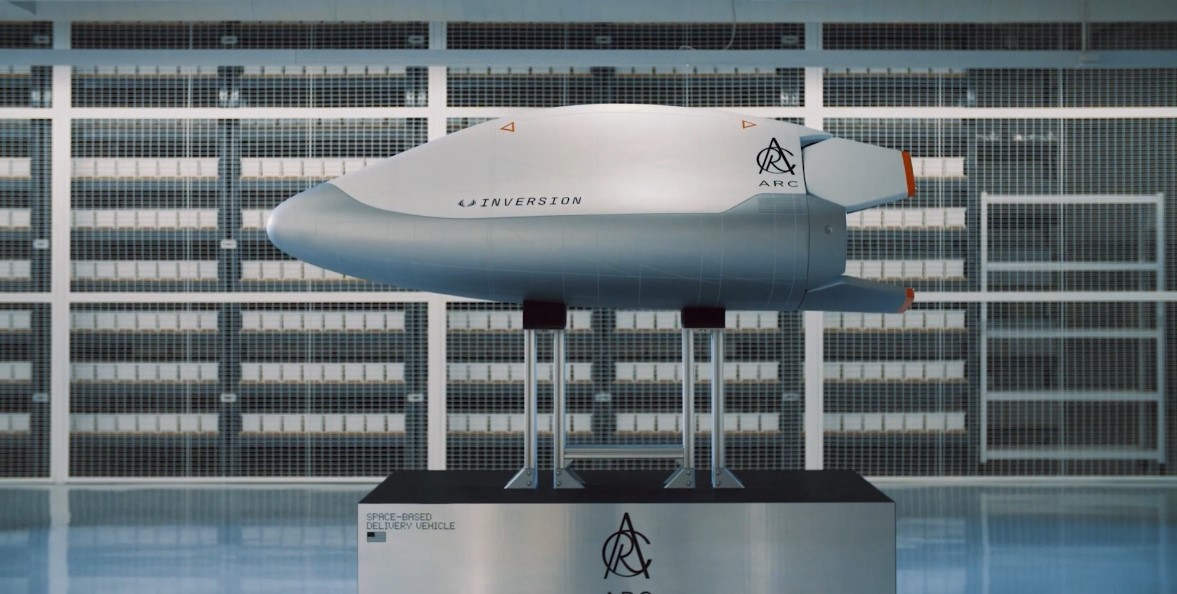
The Arc spacecraft is designed for a mission profile that sounds almost too good to be true: instant, autonomous global delivery. Here’s a closer look at its operational blueprint:
- Pre-positioned on Orbit: Unlike traditional rockets launched for specific missions, Arcs will be pre-positioned in Earth orbit, ready and waiting. They are designed to stay there for up to five years, patiently awaiting a command.
- On-Demand Deployment: When needed, an Arc can be called upon, initiating an autonomous sequence that brings its cargo back to Earth.
- Rapid Re-entry and Landing: The crucial element is speed. From the moment of command, Arc is engineered to autonomously guide itself through re-entry and land its payload at the desired location in under an hour.
- Substantial Payload Capacity: Each Arc is capable of delivering up to 500 pounds (225 kg) of supplies, a significant capacity for critical, time-sensitive cargo.
This capability is distilled into Inversion’s core philosophy: “The key discriminator is, does this make a difference in the moment it’s needed?” Arc isn’t just about faster shipping; it’s about making a difference at the exact point of need, when every minute counts.
Initial Mission: Military Precision, Global Reach
While the long-term potential for Arc is vast, Inversion’s initial focus is firmly on supporting the US military. The ability to deliver as much as 500 pounds of supplies almost anywhere in the world, almost instantaneously, provides an unparalleled strategic advantage. Imagine the difference this could make in:
- Forward Operating Bases: Delivering urgent spare parts or specialized equipment to remote military outposts without lengthy supply chain delays.
- Disaster Response: Rapidly deploying critical medical supplies, communication equipment, or survival gear to areas cut off by natural disasters.
- Tactical Support: Providing immediate resupply during unforeseen operational needs, dramatically reducing response times that typically measure in days or weeks.
This capability moves beyond traditional logistics, offering a truly dynamic and responsive asset that can adapt to rapidly evolving geopolitical or tactical situations.
Beyond Battlefields: A Humanitarian Game-Changer
While the military application is potent, the broader implications of Arc extend to humanitarian aid, disaster relief, and even commercial sectors requiring ultra-fast delivery of niche goods. Consider these scenarios:
- Post-Disaster Aid: When earthquakes, tsunamis, or hurricanes strike, getting aid to affected populations is a race against time. Arc could deliver satellite phones, water purification tablets, or emergency medical kits directly to crisis zones within hours, saving countless lives.
- Remote Medical Emergencies: Specialized medical equipment or rare antidotes could reach isolated hospitals or clinics globally, transforming emergency care.
- Industrial and Commercial Criticality: A broken component on an oil rig in the middle of the ocean or a crucial part for a semiconductor factory could be delivered almost instantly, preventing massive economic losses.
The fundamental principle remains: if something is critically needed, and traditional logistics are too slow, Arc offers a solution that redefines what’s possible.