
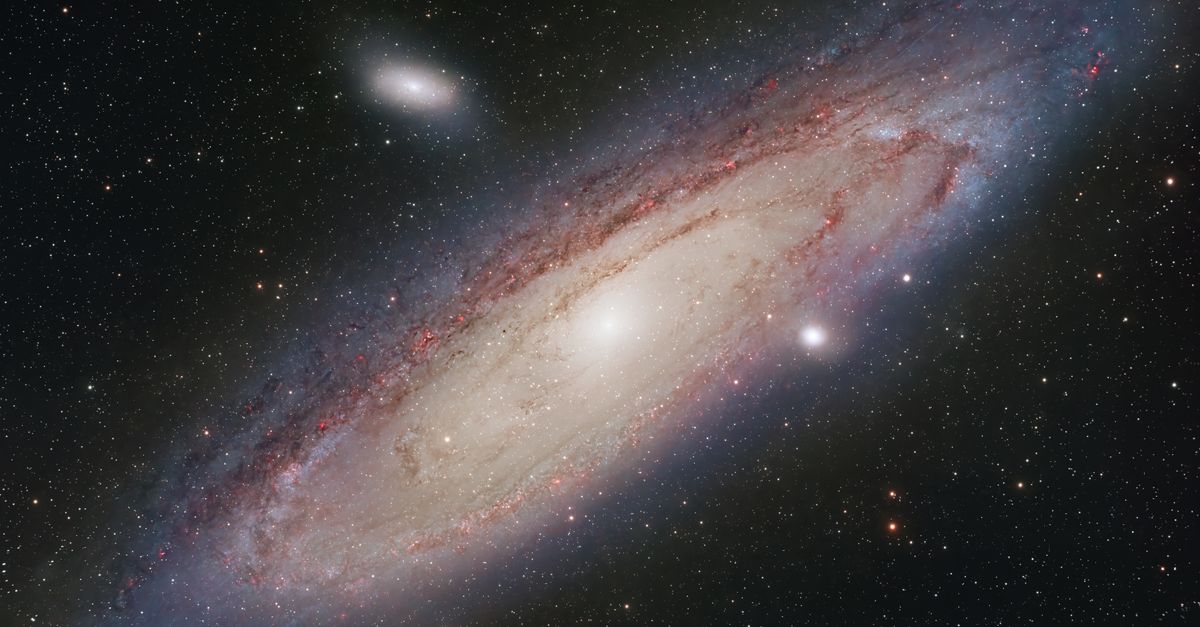
The contemporary challenge in astrophysics surveying involves the efficient acquisition of high-resolution data across vast celestial areas. While instruments like the James Webb Space Telescope (JWST) offer unparalleled depth and sensitivity over narrow fields, a complementary capability for broad-sky, high-resolution imaging has been a critical architectural gap for comprehensive cosmological mapping. The trade-off between angular resolution and field of view (FoV) historically necessitated iterative, narrow-field observations for extensive surveys.
Technical Mechanism & Architectural Solution
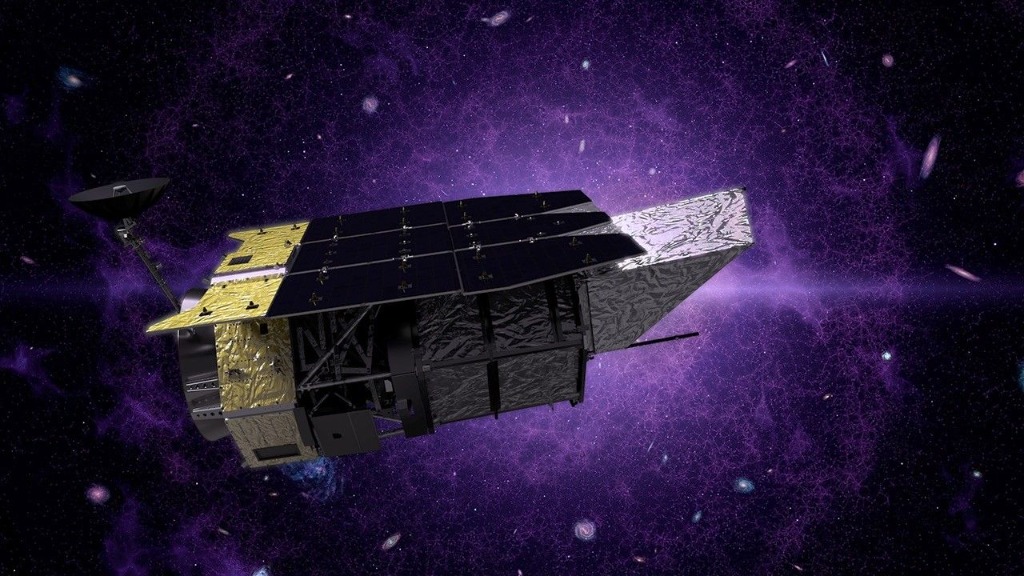
NASA’s Nancy Grace Roman Space Telescope (Roman), slated for launch on August 31, 2026, directly addresses this architectural limitation by integrating a Hubble-class primary mirror with an expansive field of view. Roman employs a 2.4-meter (7.9-foot) primary mirror, identical in diameter to the Hubble Space Telescope (HST), but pairs this with two key scientific instruments engineered for large-scale observational efficiency. Science operations are projected to commence in January 2027.
The Wide Field Instrument (WFI) is Roman’s primary imaging component, designed to deliver the same photometric and astrometric sensitivity as HST’s cameras across an area 100 times larger. This configuration enables Roman to survey approximately 0.1% of the entire night sky with a single WFI exposure, a region that would require hundreds of individual HST pointings. For context, HST has observed roughly 0.1% of the night sky over its entire three-decade operational lifetime. Roman possesses the capability to survey the entire celestial sphere at comparable resolution.
Complementing the WFI is the Coronagraph Instrument (CGI), an advanced technological demonstrator engineered to directly image exoplanets and circumstellar disks. The CGI utilizes starlight suppression techniques, filtering direct stellar emissions to enable high-contrast observation of faint exoplanetary systems. This instrument will facilitate spectroscopic characterization of exoplanet atmospheres and direct detection of protoplanetary environments.
The architectural divergence and synergy between Roman, Hubble, and Webb are summarized below:
| Feature/Telescope | Hubble Space Telescope (HST) | James Webb Space Telescope (JWST) | Nancy Grace Roman Space Telescope |
|---|---|---|---|
| Primary Mirror Diameter | 2.4 meters | 6.5 meters | 2.4 meters |
| Primary Wavelength Focus | Optical, UV, Near-Infrared | Infrared (Near & Mid) | Near-Infrared |
| Primary Objective | General-purpose deep-field imaging, spectroscopy | Deep-field imaging of early universe, exoplanet characterization | Wide-field surveys, dark energy/matter, exoplanet direct imaging |
| Relative Field of View (WFI) | Baseline | Very Narrow (Optimized for sensitivity) | 100x Hubble’s |
| Resolution (WFI) | High | High (IR) | Comparable to Hubble |
Implementation Considerations
Roman’s operational synergy with JWST is a critical architectural consideration. Both observatories detect infrared light, enabling astronomers to compare and combine their datasets for a multi-faceted view of cosmic phenomena. Roman’s broad surveys will identify rare objects and transient events across vast cosmic distances and within the local galactic neighborhood, providing targets for JWST’s high-resolution spectroscopic follow-up.
This programmatic interplay maximizes scientific return by leveraging Roman’s survey efficiency for target identification and JWST’s deep-field capabilities for detailed investigation. The high data volume generated by Roman’s WFI will necessitate robust data pipeline infrastructure for processing, calibration, and distribution to the scientific community, ensuring optimal utility of its extensive sky coverage.
KEY TAKEAWAYS
- Roman implements a wide-field imaging architecture, providing Hubble-class angular resolution over a field 100 times larger than HST’s.
- The mission’s primary objective is to execute rapid, high-resolution surveys, specifically designed for dark energy, dark matter, and exoplanet demographics.
- The Coronagraph Instrument will perform direct exoplanet imaging by actively suppressing starlight, demonstrating advanced optical suppression technologies in space.
- Roman’s wide-field capabilities complement JWST’s deep-field sensitivity, enabling a synergistic approach to cosmological discovery.