
The vastness of space holds countless wonders, but also significant threats. Every now and then, an object from the cosmos reminds us of the delicate balance of our planet’s existence. Enter Asteroid 2024 YR4, a celestial wanderer that recently caused a stir among scientists and planetary defense experts. Discovered in December 2024, this roughly 180-foot (55-meter) asteroid quickly garnered attention due to initial calculations suggesting a non-trivial chance of impacting Earth in 2032.
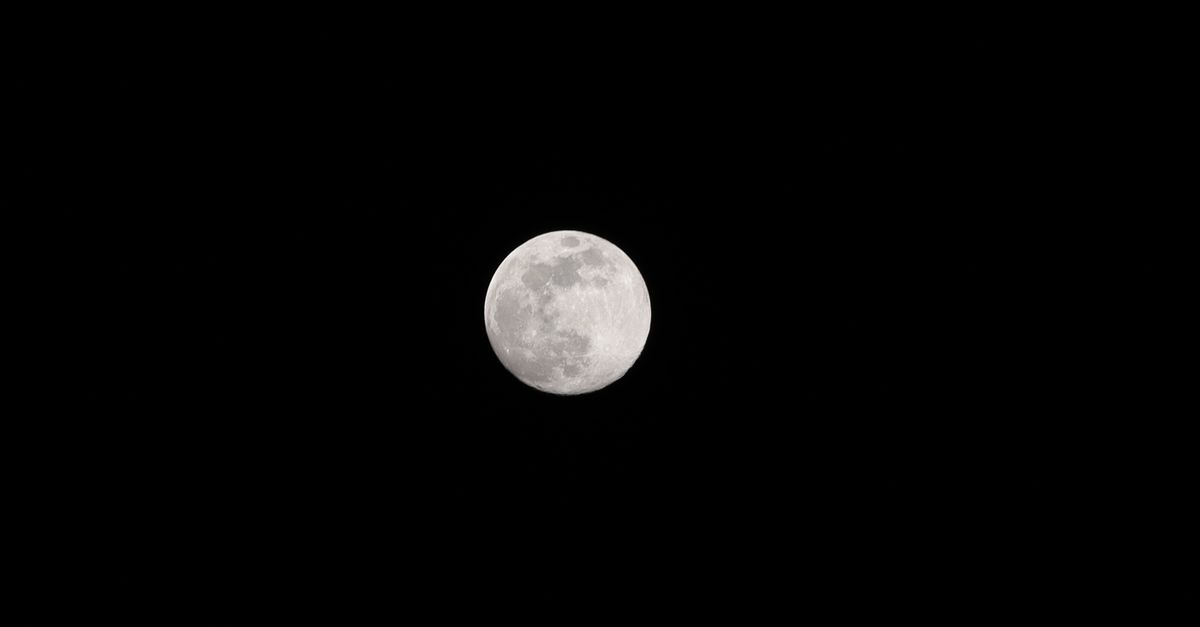
While the immediate threat to our home planet has thankfully receded, a new and equally intriguing possibility has emerged: a potential collision with our closest celestial neighbor, the Moon. And with this new threat comes a startling proposition from scientists in a recent paper: the possibility of deploying nuclear weapons to intercept and destroy 2024 YR4 before it reaches lunar orbit.
When 2024 YR4 was first spotted, working with limited observations, scientists initially pegged its impact probability with Earth in 2032 at a peak of 3.1%. Given its “city killer” potential – an object of its size is large enough to devastate a major metropolitan area – this immediately sparked global concern and media attention. For a brief period, humanity faced the unsettling prospect of a significant cosmic impact within the decade.
Fortunately, as subsequent observations accumulated through early 2025, the asteroid’s trajectory became clearer. The odds of a direct hit on Earth plummeted dramatically, settling at less than 1 in 360 (0.28%) as of February 2025. This was undoubtedly a massive relief for our planet. However, the improved tracking brought a new set of data – and a new concern. The same updated calculations revealed a fairly good chance, about 4%, of 2024 YR4 crashing into the Moon.
Why a Lunar Impact Matters to Earth
While a direct impact on the Moon might seem less immediately threatening than one on Earth, scientists are clear that a collision of this magnitude, relatively close to our planet, would almost certainly have effects on us. An asteroid the size of 2024 YR4 hitting the Moon would produce significant lunar “ejecta.” This means it would kick up the regolith – the top layer of dust and small rocks that covers the lunar surface – into space. The exact implications of this dust cloud for Earth are still a subject of research, but it could potentially cause issues ranging from minor celestial debris hazards to more significant, though less likely, atmospheric effects.
The Nuclear Option: A Last Resort?
It’s within this context of a looming lunar collision that scientists have put forth a radical, yet increasingly discussed, solution: the use of nuclear weapons. A new paper specifically probes the logistics of destroying 2024 YR4 – potentially with a nuclear device – before it comes too close to the Moon. The idea isn’t to simply detonate a bomb in space, but to carefully engineer a mission to intercept the asteroid and either vaporize it or break it into smaller, harmless pieces.
- The Challenge of Scale: An asteroid of 2024 YR4’s size, while small on a cosmic scale, is substantial enough to require an immense amount of energy to alter its course or break it apart effectively.
- The Time Crunch: With 2032 less than a decade away, any mission would need to be planned, approved, funded, built, and launched with unprecedented speed and precision.
- Precision is Key: Unlike fictional movie scenarios, a real asteroid interception mission requires pinpoint accuracy to ensure the nuclear device delivers its destructive force effectively against a rapidly moving target in the vacuum of space.
The very notion of launching a nuclear weapon into space is fraught with ethical, political, and technical challenges. International treaties prohibit the placement of nuclear weapons in space, meaning any such mission would require unprecedented global consensus and cooperation. Furthermore, while the concept of using nuclear devices for asteroid deflection has been studied for decades, this particular scenario highlights the extreme measures that might be considered when facing a “city killer” class object.
“Act Fast”: The Imperative of Planetary Defense
The repeated phrase “if we act fast” underscores the critical window of opportunity. Planetary defense isn’t just about having the technology; it’s about early detection, rapid assessment, and decisive action. For 2024 YR4, the approximately eight-year lead time until 2032 might seem generous, but in terms of complex space missions involving nuclear technology, it’s incredibly tight.
Scientists explicitly state that more research is needed before moving forward with any nuclear option. This includes further refining the asteroid’s trajectory, studying the precise effects of a nuclear detonation in space on an asteroid, and developing the logistical framework for such a mission. Every simulation, every observation, and every paper brings us closer to understanding both the threat and the potential countermeasures.
The Path Forward: Vigilance and Innovation
The discussion surrounding asteroid 2024 YR4 and the nuclear option serves as a powerful reminder of humanity’s ongoing efforts in planetary defense. While the immediate threat to Earth has diminished, the potential impact on the Moon and its subsequent effects on us demand serious consideration. It’s a testament to scientific ingenuity that such radical solutions are even being contemplated.
As technology advances, so too does our ability to detect, track, and potentially mitigate threats from space. The journey of 2024 YR4, from a terrifying Earth-bound object to a lunar concern with a controversial solution, highlights the dynamic nature of space threats and the critical importance of continuous monitoring, international collaboration, and bold scientific exploration.