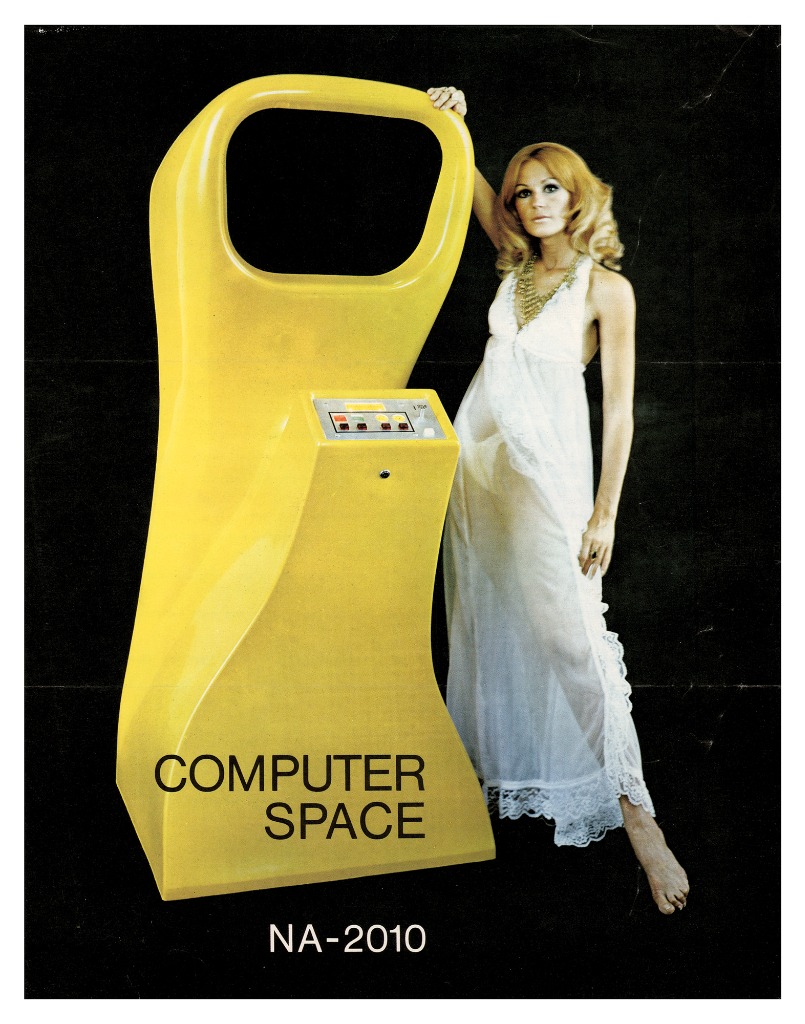
A dazzling, sparkly green arcade cabinet is making headlines, not just for its striking appearance, but for its profound historical significance. This rare two-player Computer Space machine, originally from July 1973, is a centerpiece in a massive retro tech auction dedicated to Steve Jobs and the dawn of the computer revolution.
Forget Pong for a moment – before Atari dominated arcades, there was Computer Space. This game is widely celebrated as the world’s first commercially sold arcade video game, first released to the public in late 1971.
The Birth of Arcade Gaming
Nolan Bushnell and Ted Dabney, then operating under Syzygy Engineering, designed the single-player Computer Space. It was an ambitious hardware adaptation of the legendary 1962 MIT mainframe combat game Spacewar!, laying the design foundation that would later influence arcade blockbusters like Asteroids.
The original cabinet was a retrofuturistic fiberglass marvel, sporting a small, bulbous screen and four action buttons instead of a joystick. Engineered without an expensive general-purpose microprocessor, the entire game logic was implemented using dedicated discrete TTL circuits – a masterclass in cost-constrained engineering for its era.
The Two-Player Evolution & Atari Heritage
Despite selling over 1,000 units, the initial release marked the conclusion of Syzygy’s collaboration with distributor Nutting Associates. Bushnell and Dabney soon pivoted, founding Atari and revolutionizing the coin-op industry with Pong in 1972.
Nutting Associates continued the Computer Space legacy independently, engineering and releasing a two-player edition in mid-1973. Featuring twin joystick stations and vibrant metallic-flake fiberglass shells, it preserved the classic quarter-per-play arcade business model.
Key Takeaways
- Historic Precedent: Computer Space (1971) by Nolan Bushnell and Ted Dabney is universally recognized as the world’s first commercial coin-operated arcade video game.
- The Pre-Atari Era: Created under Syzygy Engineering before the founding of Atari and the launch of Pong.
- Discrete Hardware Architecture: Powered completely by discrete TTL logic and custom diode arrays rather than a CPU.
- Rare Auction Artifact: The surviving two-player 1973 cabinet represents one of the earliest preserved milestones of video game culture.
Archival images and promotional materials courtesy of the Video Game History Foundation.