
China’s highly anticipated Chang’e 7 lunar exploration mission has been postponed from its scheduled launch window. The Chinese Manned Space program announced the decision, citing a failure to meet launch conditions and prioritizing mission prudence and absolute success.
- This delay impacts the critical global race for assessing lunar South Pole resources and establishing potential long-term human presence, a key strategic objective for multiple spacefaring nations.
- The postponement of a complex four-component mission (orbiter, lander, rover, mini-hopper) can cascade into subsequent lunar missions and international collaborations, potentially affecting overall lunar exploration roadmaps.
- While weather-related, any launch delay prompts scrutiny of launch site resilience and operational protocols under adverse environmental conditions, crucial for high-value space assets and future operational robustness.
The Chang’e 7 mission, a multi-component exploration system, was scheduled to launch as early as Sunday. Its architecture includes a lunar orbiter for remote sensing, a lander for surface deployment, a rover for mobility, and a mini-hopper probe designed for localized sampling or detailed topographic mapping. The mission’s primary objective is a soft landing at the Moon’s South Pole, a region of significant scientific interest due to the high probability of water ice reserves within its permanently shadowed craters.
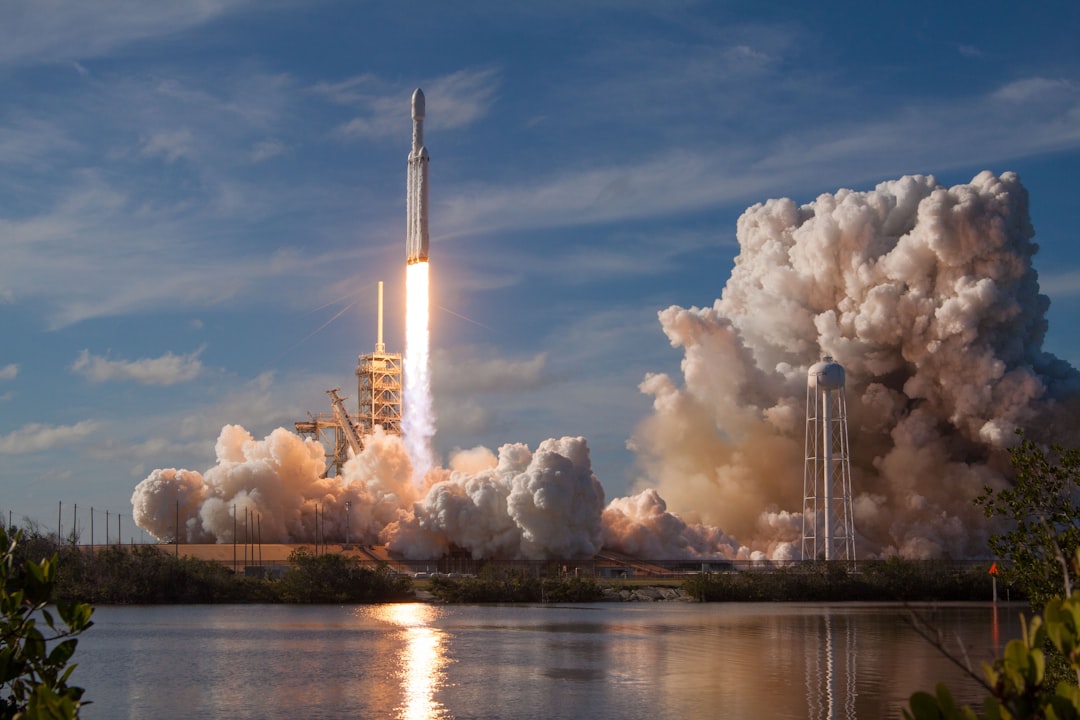
The mission was slated for launch on a Long March 5 heavy-lift rocket from the Wenchang Space Launch Site. This facility is strategically located on Hainan island in the South China Sea. The Chinese agency provided no explicit technical explanation for the delay. However, the most probable cause is Typhoon Narra, a moderate Tropical Storm characterized by sustained winds of 45 mph. This system has been impacting the waterway separating Hainan island and mainland China, creating unsuitable weather conditions for launch operations.
According to the Joint Typhoon Warning Center, Typhoon Narra is projected to persist in the general vicinity for several more days. This forecast likely led Chinese meteorologists to determine that the weather would not clear sufficiently within the current launch window from Wenchang, which is critical for achieving the precise lunar pole trajectory.
The indefinite delay of Chang’e 7 necessitates a revised launch schedule, contingent on improved meteorological conditions and a comprehensive re-evaluation of the critical path for mission hardware and personnel readiness. Such postponements, while inherent to complex space launches, underscore the inherent environmental dependencies of deep-space endeavors. China’s broader lunar program, including the subsequent Chang’e 8 mission and the ambitious International Lunar Research Station initiative, will likely re-evaluate near-term timelines based on this adjustment, potentially influencing competitive lunar exploration efforts and international partnerships.