
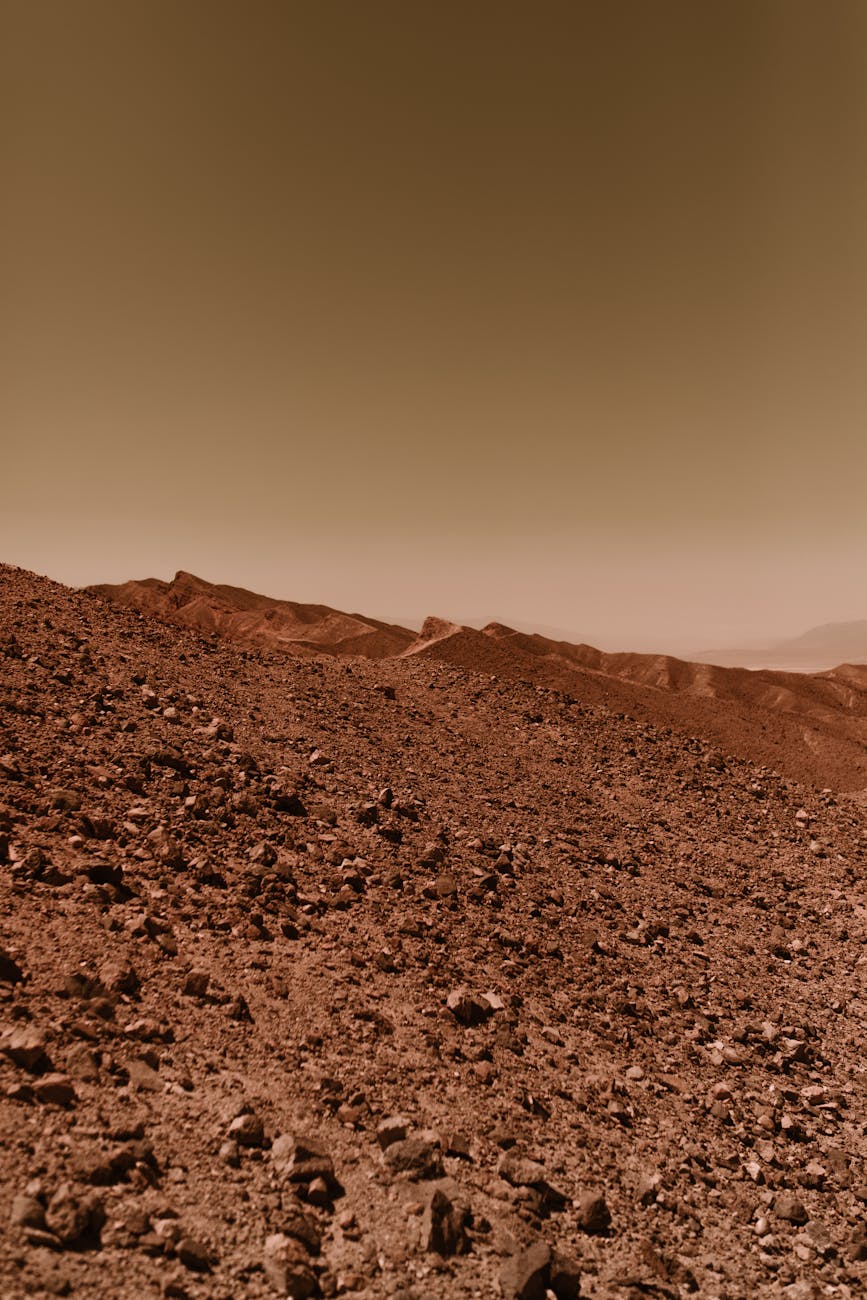
For decades, the question “Is there life beyond Earth?” has fueled our deepest curiosities and propelled humanity’s most ambitious space missions. Now, after a year of intense scientific scrutiny, NASA’s Perseverance Mars rover might just have delivered our most compelling clue yet. A rock sample, affectionately nicknamed ‘Sapphire Canyon,’ collected from the ancient riverbed of Jezero Crater, exhibits peculiar ‘leopard spots’ that scientists believe could be potential biosignatures—the strongest hint of ancient microbial life processes we’ve ever encountered on the Red Planet.
This groundbreaking discovery, detailed in a recent paper published in the esteemed journal Nature, has ignited a fresh wave of excitement within the scientific community and among space enthusiasts worldwide. It’s a testament to the meticulous planning and relentless dedication behind the Perseverance mission, a journey that continues to redefine our understanding of Mars’ past and its potential to harbor life.
The ‘Sapphire Canyon’ sample was extracted from a rock formation named “Cheyava Falls” last year, during Perseverance’s exploration of the “Bright Angel” formation. This region is nestled within the dramatic Neretva Vallis, a colossal ancient river valley, approximately a quarter-mile wide, that once channeled rushing water into Jezero Crater billions of years ago. The geological context alone—a former lakebed fed by a river—makes Jezero Crater a prime target in the search for ancient Martian life, as water is fundamental for all known life forms.
So, what exactly constitutes a “potential biosignature”? It’s a crucial distinction. A potential biosignature is a substance or structure that *might* have a biological origin. It’s not definitive proof of life, but rather a compelling piece of evidence that strongly suggests biological processes could have been at play. Think of it as a scientific breadcrumb trail: each biosignature adds to the evidence, but it takes many such crumbs—and rigorous validation—to confirm the presence of an ancient feast.
These ‘leopard spots’ within the ‘Sapphire Canyon’ rock are microscopic features or chemical compositions that, on Earth, would typically be associated with microbial activity. They could be the fossilized remains of ancient microbes, or the byproducts of their metabolic processes interacting with the Martian environment. The fact that these features have withstood a year of intense scientific scrutiny and still remain the mission’s best candidate for containing such signs underscores the profound significance of this finding.
A New Chapter in the Search for Life
For NASA, this finding represents a momentous step forward. As acting NASA Administrator Sean Duffy highlighted, it’s the closest humanity has ever come to discovering life on Mars. This isn’t merely an incremental advance; it’s a groundbreaking revelation that promises to significantly deepen our understanding of Mars’ ancient past, its habitability, and indeed, the very origins of life itself. The implications extend far beyond Mars, informing our broader search for life across the cosmos.
The Perseverance mission was meticulously designed with exactly this kind of science in mind. Equipped with advanced instruments capable of drilling, collecting, and analyzing samples with unprecedented precision, the rover has been systematically exploring Jezero Crater since its landing. Its primary goal: to seek out signs of ancient microbial life and collect samples for eventual return to Earth. The ‘Sapphire Canyon’ sample is now arguably the jewel in that collection, holding tantalizing secrets.
The Road Ahead: Gold Standard Science and Earth Return
While the excitement is palpable, NASA emphasizes a commitment to “Gold Standard Science.” This means that every potential biosignature must undergo exhaustive analysis and peer review. The publication in Nature is a critical step, making this invaluable data available to the wider scientific community globally. Researchers around the world can now study the findings, offering their own interpretations and potentially confirming or refuting the biological potential of these Martian ‘leopard spots.’
The ultimate confirmation, however, will likely come when these samples are physically brought back to Earth. The Mars Sample Return campaign, a highly complex and ambitious endeavor, aims to retrieve these precious Martian specimens, including ‘Sapphire Canyon,’ for in-depth analysis in terrestrial laboratories. Here, scientists will have access to instruments far more powerful and diverse than anything that can be sent to Mars, capable of performing definitive tests that could finally answer the monumental question: Was there ever life on Mars?
Nicky Fox, associate administrator for Science Mission Directorate at NASA Headquarters, reiterated this strategic vision, emphasizing that the mission’s ability to identify such potential biosignatures is a direct result of NASA’s forethought and execution. This rigorous, multi-stage approach—from remote detection and sampling on Mars, to peer-reviewed publication, and ultimately, to Earth-based laboratory analysis—underscores the scientific community’s cautious optimism and unwavering commitment to robust evidence.
The Enduring Quest
The discovery of potential biosignatures in the ‘Sapphire Canyon’ rock sample marks a pivotal moment in our enduring quest to understand our place in the universe. It brings us tantalizingly close to answering one of humanity’s most profound questions, pushing the boundaries of what we thought possible. While definitive proof still awaits, the ‘leopard spots’ on this ancient Martian rock serve as a powerful beacon, guiding our scientific endeavors and fueling our dreams of discovering life beyond our home planet. The Red Planet continues to surprise us, and with every sample collected, every data point analyzed, we draw closer to unraveling its deepest mysteries.