
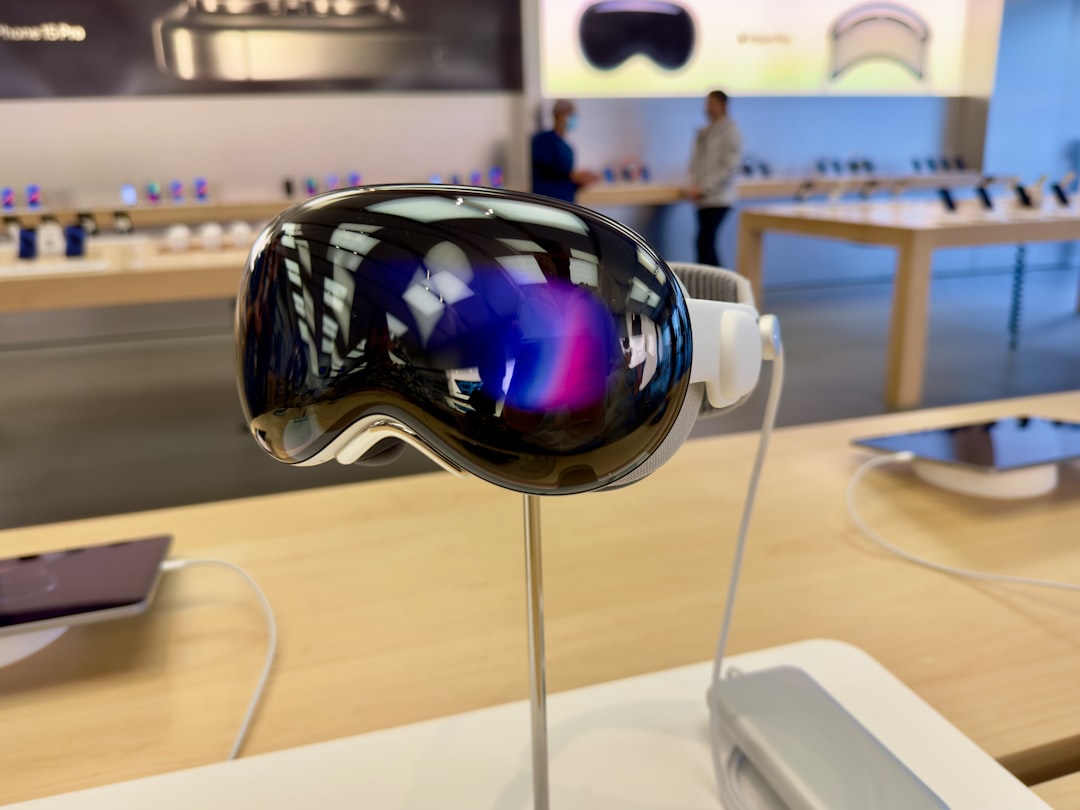
Apple has initiated a strategic realignment within its Vision Pro and Siri divisions, impacting approximately 200 roles. This restructuring signals a definitive pivot towards the development of more pervasive smart glasses and advanced, LLM-driven AI technologies.
This shift moves resources away from high-fidelity immersive video and gaming applications on Vision Pro, and from legacy Siri architectures, towards a future ecosystem centered on integrated augmented reality and advanced on-device and cloud AI.
- Enterprise AR/AI Integration: The pivot towards smart glasses over dedicated spatial computers suggests a future focus on practical, always-on AR applications for enterprise and daily use, integrating AI more deeply into user interaction paradigms.
- Compute Architecture Evolution: The transition to LLM-based Siri demands substantial re-architecting of inference pipelines, likely driving significant investment in specialized on-device Neural Processing Units (NPUs) and scalable cloud-based GPU clusters for training and complex inference tasks.
- Market Position Re-evaluation: By de-emphasizing high-cost, niche spatial computing (specifically for gaming/immersive video) and prioritizing Meta-like AI glasses, Apple is recalibrating its competitive stance to address a broader, more accessible consumer and enterprise AR market.
Technical & Architectural Context
The layoffs within the Vision Pro division are predominantly concentrated in teams focused on gaming and immersive video content. This realignment indicates a strategic de-prioritization of the Vision Pro as a high-fidelity, dedicated entertainment platform, shifting resources towards a more power-efficient and ubiquitously integrated AR glass form factor. The initial Vision Pro iteration leverages high-resolution micro-OLED displays (23 million pixels across two panels), requiring substantial render throughput and complex optical systems to achieve its stated 3,386 pixels per inch (PPI) at a 90-100Hz refresh rate. The future “Meta-like AI glasses” imply a design emphasizing lower power consumption, wider field-of-view (FoV) waveguides, and robust edge AI processing for contextual awareness, rather than raw pixel density for immersive content.
Concurrently, the Siri division is undergoing a significant architectural overhaul. The affected roles are primarily associated with the legacy Siri assistant, indicating a definitive transition from traditional rule-based or statistical natural language processing (NLP) models to Large Language Model (LLM)-based AI. This necessitates a fundamental shift in compute requirements. Legacy Siri relied on smaller, often device-local, models for keyword spotting and domain-specific command execution, requiring relatively modest NPU or CPU resources. The new LLM-based Siri, introduced with iOS, demands significantly greater computational power for inference, characterized by higher FLOPs and increased memory bandwidth to accommodate billions of parameters. This architectural shift requires expertise in transformer models, quantization techniques for on-device deployment, and distributed inference for cloud-backed operations.
Strategic Outlook & Next Milestones
Apple’s strategic pivot suggests a long-term vision for AR as an ambient, integrated experience rather than a singular, high-intensity device. The de-emphasis on Vision Pro’s gaming and immersive video applications, alongside reports of shelving a direct successor and reassigning teams to AR glasses development, reinforces this direction. The firm’s focus on next-gen AI, particularly with an LLM-driven Siri, indicates a commitment to delivering a more intelligent and contextually aware user interface across its ecosystem.
Future product cycles are expected to reflect this strategic reorientation, with iOS 18 already integrating elements of the new LLM-based Siri AI. The development roadmap for “smart glasses” will likely prioritize power efficiency, robust sensor fusion for environmental understanding, and seamless integration with Apple’s existing hardware and software platforms. This strategic consolidation aims to position Apple competitively in the evolving landscape of pervasive AI and augmented reality.