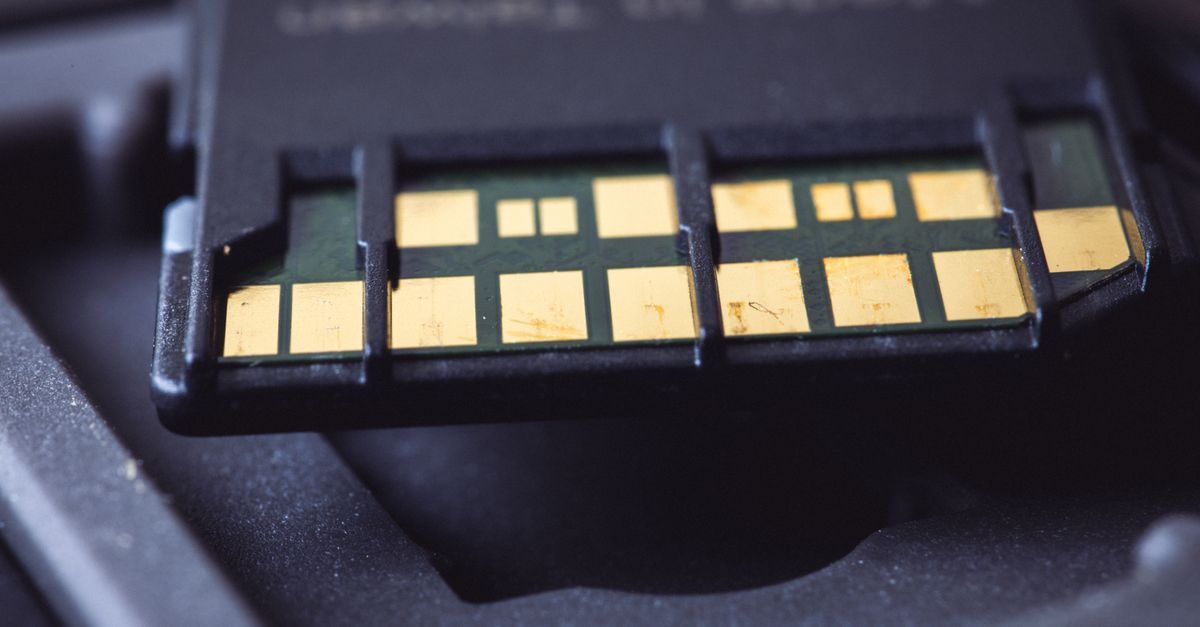
Penn State researchers have developed a novel bio-hybrid memory system integrating synthetic DNA with crystalline perovskite semiconductors, addressing the long-standing incompatibility between biological and electronic materials. This breakthrough enables ultra-low-power memory devices with unprecedented data density, crucial for next-generation AI and data center architectures.
Technical Architecture & Specifications Breakdown
The core innovation lies in a new materials platform that seamlessly merges the high information storage capacity of DNA with the exceptional electronic properties of perovskite. The system utilizes synthetic DNA, engineered from commercially available molecules into short genetic sequences tailored for specific electronic functions. These DNA sequences are doped with silver nanoparticles and integrated with thin films of crystalline perovskite, a semiconductor already employed in solar cells, lasers, and data storage. This doping process facilitates electrical conductivity in the DNA and ensures precise architectural alignment at the nanoscale.
This bio-hybrid material forms a memristor (memory resistor), a device capable of retaining information after power removal, mimicking synaptic functions in neuromorphic computing. The developed memristors exhibit resistive switching (RS) characteristics, operating at voltages below 0.1 V and achieving a record-low power density of 0.01 W/cm². They demonstrate a stable ON/OFF ratio exceeding 10⁵, sustained for over six weeks in ambient conditions, alongside robust endurance over 10³ cycles and data retention beyond 4 × 10³ seconds at temperatures up to 120 °C.
Parameter
Specification
Notes
Storage Medium
Synthetic DNA + Crystalline Perovskite
Bio-hybrid platform
Data Density (Theoretical)
~215 million GB/gram (~215 PB/gram)
Significantly surpasses conventional media
Operating Voltage
< 0.1 V
Ultra-low power operation
Power Density
0.01 W/cm²
Record-low for such devices
ON/OFF Ratio
> 10⁵
Stable resistive switching
Retention (Ambient)
> 6 weeks
Maintained in ambient conditions
Endurance
> 10³ cycles
Demonstrated switching cycles
Concrete Data & Competitive Context
DNA’s inherent data density is a primary driver for this research; a single gram can store approximately 215 million gigabytes (215 petabytes) of data. This far exceeds the density of current NAND flash or magnetic storage technologies, positioning DNA as a transformative medium for archival and even active storage. While existing DNA storage solutions face challenges with synthesis speed and cost for active use, this bio-hybrid approach focuses on integrating DNA with electronics to enable functional memory devices. The low operating voltage of less than 0.1 V and power density of 0.01 W/cm² are critical advancements, indicating a potential for significantly more energy-efficient data processing compared to traditional silicon-based memory.
STRIDING TECH WIRE•WEEKLY RADAR
Weekly Technology Briefings
Multi-source tech synthesis, primary research breakdowns, and high-impact insights delivered every Sunday morning.
Ecosystem & Developer Impact
This foundational materials science breakthrough holds significant implications for future data center design and high-performance computing. By enabling ultra-dense, low-power memory devices, it could lead to more efficient data centers and systems capable of handling increasingly complex information, particularly in AI and neuromorphic computing. While not directly affecting current software stacks like CUDA or ROCm, the underlying hardware paradigm shift could necessitate new low-level APIs and data management strategies as bio-hybrid memory systems mature for enterprise deployment. The ability to store and process information in the same location, mimicking biological neurons, promises a pathway to more energy-efficient AI systems.
Key Technical Takeaways
**Density Revolution:** The bio-hybrid system leverages DNA’s ~215 PB/gram density, offering orders of magnitude improvement over conventional electronic storage.
**Energy Efficiency:** Operating at less than 0.1 V with a power density of 0.01 W/cm², these memristors promise substantial reductions in power consumption for memory operations.
**Materials Integration:** The successful integration of synthetic DNA with crystalline perovskite overcomes a fundamental biological-electronic interface challenge.
**Neuromorphic Potential:** The memristive properties, combining storage and processing, position this technology as a strong candidate for future neuromorphic and AI hardware.
✉
STRIDING TECH INTELLIGENCE WIRE
Weekly Technology Briefings
Multi-source tech synthesis, primary research breakdowns, and high-impact tech news delivered every Sunday morning.